 A Lahza school workshop
First aid
What do you do in the first minutes?
Dr. Osama Salama — Emergency Medicine Specialist, Head of the Emergency Department, Al Qassimi Hospital


Before the ambulance arrives: prepare the place and the information
The ambulance is on its way… now what? The minutes before the team arrives make a real difference to how fast your loved one is saved.
- Stay on the line and don't hang up until the dispatcher says so — they will guide what to do with the patient until arrival.
- Send a greeter: someone at the gate or building entrance waving to the team — and turn on the outside lights at night.
- Clear the path indoors: move furniture out of the stretcher's way, shut pets in a room, and move children away from the scene.
- Pack the hospital bag: ALL the patient's medicines in their boxes, their reports, ID and insurance card — put it by the door.
- Do not feed or give drink to the patient however much they ask — they may need anaesthesia or surgery.
- Note the times: when did symptoms start? When did consciousness change? — the team's first two questions.
 Topic 1
Burns: the first 20 minutes make the difference
Cool running water for twenty minutes — that is the first and most important treatment for any burn; every home remedy besides it causes harm.
Burns
A burn's severity is decided in the first minutes: proper cooling stops the deep tissues from "cooking" and reduces pain and scarring. Simplicity saves here.
The steps
- Move the person safely away from the burn source.
- Cool running tap water over the burn for a full 20 minutes — not ice, not iced water. It helps even up to 3 hours after the burn.
- Remove rings, watches and non-stuck clothing before swelling starts — but never pull off anything stuck to the skin.
- Cover the burn loosely with clear plastic wrap (kitchen film) or a clean, non-fluffy cloth.
- Give simple pain relief (paracetamol) if needed.
 Topic 2
Nosebleed: head forward, never back
The commonest mistake in the commonest home first aid — and the right method stops most nosebleeds in ten minutes.
Nosebleed
Most nosebleeds come from small vessels at the front of the nasal septum and stop with correct pressure. The problem is that most people do the exact opposite: they tip the head back.
The right method
- Sit and tilt the head slightly forward — not back.
- Pinch the soft part of the nose (just below the bone) between thumb and index finger.
- Hold for a full 10 minutes without lifting to check — every peek restarts the clock.
- Breathe through the mouth; a cold compress on the bridge of the nose may help.
- Once it stops: don’t blow the nose, don’t put anything in it, and avoid bending and exertion for a few hours.
 Topic 3
Severe bleeding: press and don't stop
The body doesn't carry much spare blood — and continuous direct pressure with your hand stops most bleeding before the ambulance arrives.
Severe bleeding
Severe bleeding is one of the few conditions that can kill within minutes — and also one an ordinary person most often saves with a single action: strong pressure that doesn't stop.
The steps
- Call 998, or have someone do it immediately.
- Press directly on the bleeding point with a clean cloth (or your bare hand if none) firmly and continuously.
- Don't lift your hand "to check" — interrupted pressure reopens the wound. Keep pressing for at least 10 continuous minutes.
- If the cloth soaks through: add a new layer on top and don't remove the old one.
- Lay the person down, elevate the bleeding limb if possible, and keep them warm.
- Watch for shock: pallor, cold skin, sweating, dizziness — tell the ambulance crew.
 Topic 4
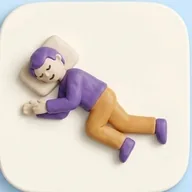
Recovery position
Someone unconscious but breathing normally? This simple position protects their life until the ambulance arrives.
Recovery position
When an unconscious person lies on their back, their tongue can block the airway, and they can choke on vomit. The recovery position (lying on the side) keeps the airway open and lets any fluids drain out.
When do I use it?
- The person is unconscious or barely responsive and breathing normally.
- No suspicion of a neck or spine injury (fall from height, road accident).
- If they are NOT breathing: start CPR immediately instead.
The steps
- Kneel beside them; extend the arm nearest you at a right angle to their body, palm up.
- Place the back of their far hand against their near cheek and hold it there.
- Bend their far knee, then pull it towards you to roll them gently onto their side.
- Tilt the head back slightly to keep the airway open, with the mouth angled toward the ground.
- Call 998 if you haven't yet, stay with them, and watch their breathing continuously until help arrives.
 Topic 5
Acute asthma attack: your inhaler first, then your decision
Wheeze, cough, a tightening chest… asthmatics know their attacks — but some attacks are not like their sisters, and need a faster decision than usual.
Acute asthma attack
In an asthma attack the airways tighten and inflame, narrowing the air's path. The reliever inhaler (usually blue) opens them within minutes — but a severe attack may need more than the inhaler, and delay in calling for help is its most dangerous part.
During the attack
- Sit upright — don't lie down — and try to stay calm; panic tightens breathing further.
- Take a puff of the reliever (one puff every 30–60 seconds, up to 10 puffs) — ideally through a spacer if available.
- No better after 10 puffs, or symptoms return quickly: call 998.
- Repeat the dose after 10 minutes if the ambulance is delayed — reliever inhalers are safe in repeated doses during an attack.
- Stay seated until help arrives, and loosen tight clothing.
 Topic 6
Low blood sugar: when a diabetic starts shaking
Cold sweat, tremor and sudden hunger in a diabetic? Fifteen grams of sugar now — not in a little while.
Low blood sugar
Hypoglycaemia (usually below 70 mg/dL) happens in diabetics on insulin or certain tablets — from a delayed meal, extra exertion, or too large a dose. The brain runs on sugar, so consciousness deteriorates fast if you don't act.
The signs
- Cold sweat, tremor, palpitations, intense hunger.
- Confusion, sudden irritability, strange speech — they may seem "drunk".
- And in severe cases: drowsiness, seizure, unconsciousness.
Awake and able to swallow? The 15/15 rule
- Give 15 grams of fast sugar: half a cup of juice, 3 dates, 3 teaspoons of sugar in water, or glucose tablets.
- Wait 15 minutes and re-check the sugar if a meter is available.
- Still low or still symptomatic? Repeat another 15 grams.
- After improvement: a real snack (bread, dates with milk) to hold the sugar up.
 Topic 7
Heat stroke: when the body surrenders to the heat
In a Gulf summer, the difference between heat exhaustion treated in the shade and life-threatening heat stroke… is a level of consciousness.
Heat stroke
The body cools itself by sweating. In extreme heat and humidity this system can fail: it starts as heat exhaustion, and with continued exposure becomes heat stroke — body temperature above 40°C with the brain affected. Highest risk: outdoor workers, children, the elderly, and midday athletes.
Heat exhaustion (stage one — treat on the spot)
- Heavy sweating, dizziness, headache, nausea, muscle cramps, exhaustion.
- Consciousness is normal — that is the dividing line.
- Response: move them to shade or air conditioning now, remove extra layers, spray water and fan them, give cool water in repeated sips. Better within 30 minutes? Good. Not better? ER.
Heat stroke (a killer emergency — 998 now)
- The signs: confusion, strange behaviour or unconsciousness, hot skin (dry or sweaty), very high temperature, seizure.
- Call 998 immediately — then cool without hesitation or delay: move to shade, strip outer clothing.
- Spray with water and fan them; ice packs on the neck, armpits and groin — or immerse in cool water if possible.
- Don't give drinks while confused — they will choke.
- Keep cooling until the ambulance arrives — every minute of cooling protects the brain.
 Topic 8
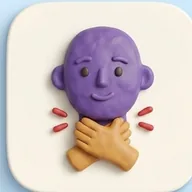
Choking
Someone clutching their throat, unable to speak or cough? You have a few minutes — and simple steps that save them.
Choking
Choking happens when food or a foreign object blocks the airway. Telling a partial blockage from a complete one is the key to acting correctly.
Complete blockage: no sound, no cough, no breath
- Ask someone to call 998 immediately (or call yourself if alone, after starting first aid).
- 5 back blows: stand behind them, lean them slightly forward, and strike between the shoulder blades with the heel of your hand.
- 5 abdominal thrusts (Heimlich): place your fist above the navel and below the ribcage, grasp it with your other hand, and pull sharply inward and upward.
- Alternate: 5 back blows then 5 abdominal thrusts, until the object comes out or the person collapses.
- If they collapse: lower them carefully to the ground and start CPR immediately.
 Topic 9
Infant choking (under 1 year)
Infants explore the world with their mouths — and choking in infants is treated differently from adults: never abdominal thrusts.
Infant choking (under 1 year)
An infant's airway is narrow; a small piece of food or a toy is enough to block it. The right response in the first seconds saves them — the wrong one (like abdominal thrusts) can harm them.
The steps
- If they are coughing or crying audibly: the airway is not fully blocked — watch closely, don't interfere.
- If they make no sound or turn blue: have someone call 998 immediately.
- 5 back blows: lay the infant face-down along your forearm, head lower than chest, supporting the head; give 5 blows between the shoulder blades with the heel of your hand.
- 5 chest thrusts: turn them face-up on your forearm, head still low; press the center of the chest with two fingers 5 times.
- Alternate (5 back + 5 chest) until the object comes out or they lose consciousness.
- If they become unresponsive: start infant CPR immediately.
 Topic 10
Drowning: silent and fast — prevention is the first rescue
Real drowning looks nothing like the movies: no screaming, no waving — a child disappears quietly in a pool full of people.
Drowning
Drowning is a leading cause of child death in our region, mostly in home pools and under adults' eyes. A child drowns in under a minute, in complete silence.
You got them out of the water — now what?
- Have someone call 998 and fetch an AED if available.
- Check: responding? breathing normally?
- Not breathing? Start CPR immediately — and in drowning specifically: if trained, start with 5 rescue breaths then compressions; if untrained, do continuous chest compressions.
- Breathing but unconscious? Recovery position, and watch the breathing.
- Remove wet clothes and keep them warm.
- Anyone who nearly drowned and "seems fine" but then coughs, gets drowsy or short of breath needs ER assessment — lung problems can be delayed by hours.
 Topic 11
Stroke: Face, Arm, Speech… Time
In a stroke, about two million brain cells die every minute. A three-step test can save a person's brain.
Stroke
A stroke happens when blood is cut off from part of the brain — by a blocked artery or a bleed. Modern treatment can dissolve or retrieve the clot, but its success depends on arriving within the first hours of symptom onset.
The quick test (F.A.S.T)
- Face: ask them to smile — does one side droop?
- Arm: ask them to raise both arms — does one drift down?
- Speech: ask them to repeat a simple sentence — is it slurred or strange?
- Time: any single sign = call 998 immediately.
 Topic 12
CPR (hands-only)
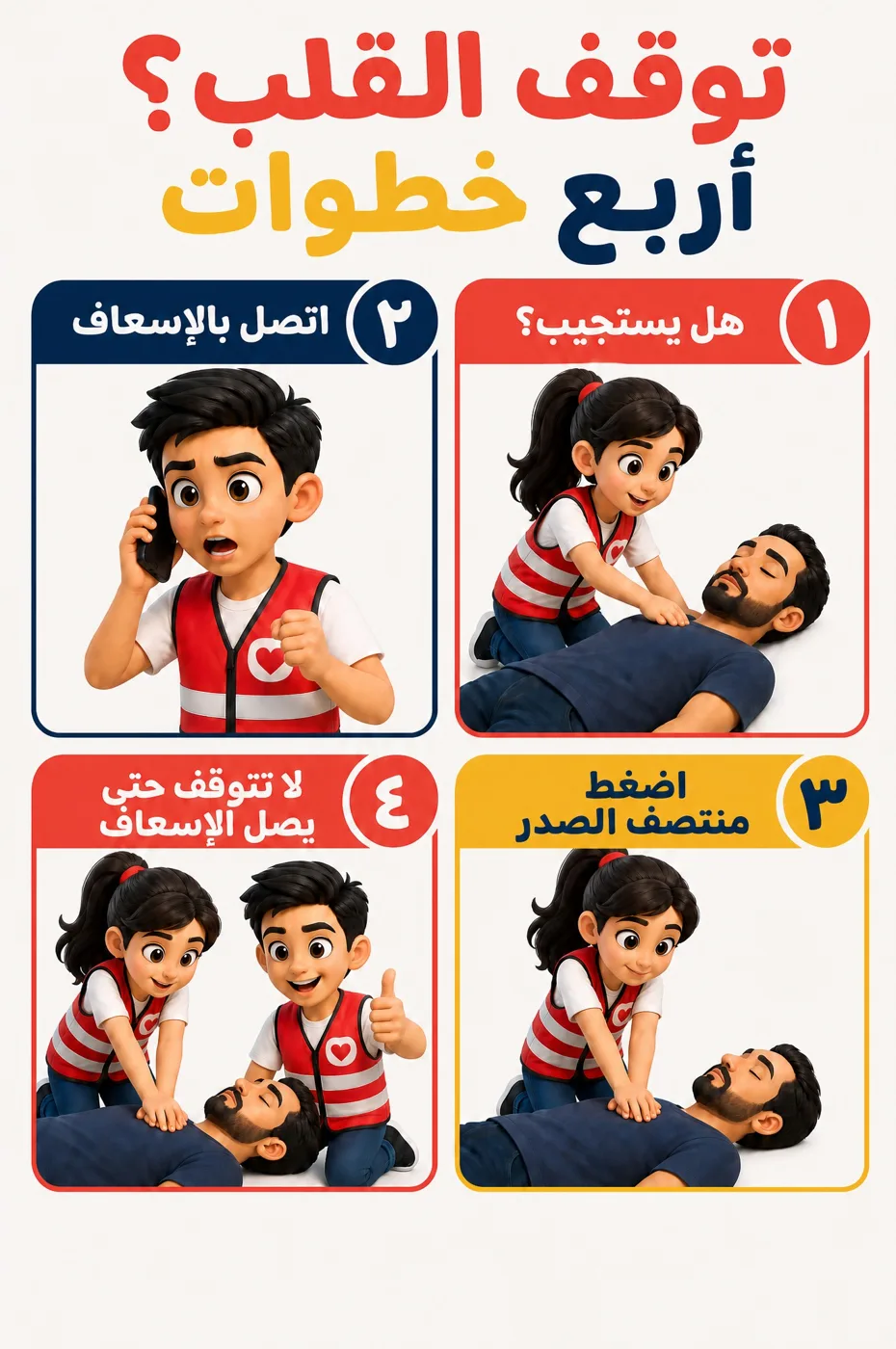
When someone's heart stops in front of you, your hands can be the difference between life and death — in the critical minutes before the ambulance arrives.
CPR (hands-only)
In sudden cardiac arrest, the chance of survival drops by about 10% for every minute without CPR. Hands-only chest compressions are a simple technique anyone can learn — and they can double or triple the chance of survival.
When do I start CPR?
- The person does not respond when you call them and gently shake their shoulders.
- They are not breathing at all, or only gasping abnormally (agonal breathing).
- If both are true: start immediately — do not wait.
The steps — hands only
- Make sure the scene is safe before approaching the patient.
- Check for responsiveness and normal breathing: unresponsive and not breathing normally, or only gasping? Start CPR immediately.
- Call 998, place the phone on speaker, and follow the dispatcher's instructions — ask someone nearby to bring an AED, if available.
- Place the heel of one hand in the centre of the chest (lower half of the breastbone), your other hand on top, fingers interlocked.
- Push hard and fast: 5–6 cm deep, at 100–120 compressions per minute — the beat of a fast, steady song.
- Allow the chest to fully recoil after each compression, and minimise interruptions.
- Continue without stopping until the ambulance arrives, an AED is ready to use, the person shows signs of life, or you are physically unable to continue.
Your turn: practise with your hands
You do not learn a skill by watching — every student practises it.
- CPR
- Choking
- Recovery position
- Stopping bleeding
In our home, a lifesaver
- Scan the code and record your attendance.
- Play “Lahza Lifesaver” on our site.
- Claim your certificate with your name.
- Send us your photo with your certificate — with your family’s consent — to join “the newest Lahza savers” on our site and page.
We never publish a student’s photo without a parent’s or guardian’s consent — and we remove it whenever you ask.
Thank you — you are Lahza savers
Everything from today, written and on video, free on the site.