
A head knock may be a simple scalp bruise — or a concussion, or bleeding inside the skull. The danger is not measured by the outside wound: scalp cuts bleed heavily and look frightening yet are usually superficial, while internal bleeding may leave no outside mark at all.
In short — what to do
- Stop scalp bleeding with gentle pressure using a clean cloth.
- Sit the person down, reassure them, and hold a cloth-wrapped cold compress on the spot — never ice directly on skin.
- Watch their awareness: ask simple questions (their name, the day, what happened) and note the answers.
- If the blow was violent — a fall from height, a road accident — do not move the neck; wait for the ambulance.
This topic’s video is coming soon on our channels — follow us
@lahzaem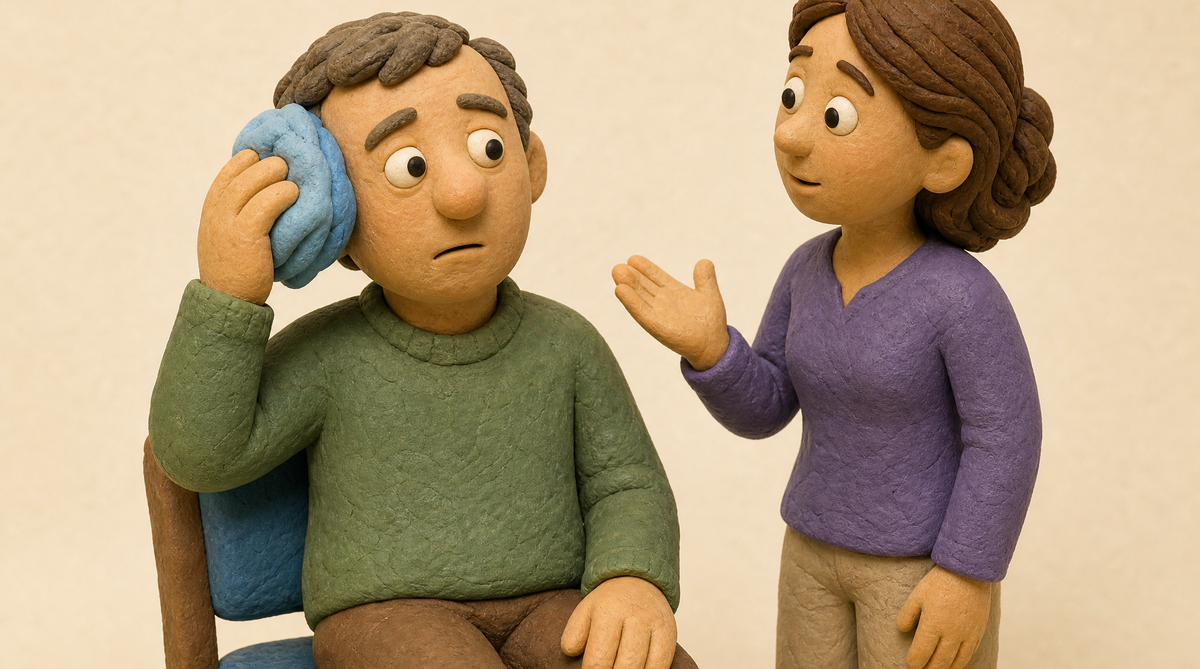
The full details
First aid
- Stop scalp bleeding with gentle pressure using a clean cloth.
- Sit the person down, reassure them, and hold a cloth-wrapped cold compress on the spot — never ice directly on skin.
- Watch their awareness: ask simple questions (their name, the day, what happened) and note the answers.
- If the blow was violent — a fall from height, a road accident — do not move the neck; wait for the ambulance.
 Call an ambulance or go to the ER immediately
- Loss of consciousness even for seconds, or confusion.
- Repeated vomiting, or a headache that keeps worsening.
- Abnormal drowsiness or difficulty waking them.
- Clear fluid or blood from the nose or ear.
- A seizure, weakness or numbness in a limb, or disturbed speech or vision.
- On blood thinners, or over sixty — the threshold for concern is much lower.
The next 48 hours
Sleeping at the normal bedtime is fine — keeping the injured person awake is a myth. Check on them once or twice while asleep: normal breathing and a normal position are enough. Watch for 48 hours — any sign from the danger list means the ER at once.
This content is for general health education only and is not medical advice. Always seek guidance from a qualified healthcare professional. In an emergency, call 998.