One of the first things staff ask: "rate your pain from zero to ten". It isn't a formality — your number is the measuring unit we use to track your response to treatment: it was 8 and became 3 after the painkiller? The treatment is working.
In short — what to do
- Some strong painkillers can mask important signs the doctor needs to diagnose the cause — especially in acute abdominal pain before the first examination.
- The right painkiller is chosen by the type of pain and its likely cause, not just its severity.
- After the initial assessment, there is no medical reason to withhold good pain relief even before the diagnosis is complete — that is the modern approach.
This topic’s video is coming soon on our channels — follow us
@lahzaem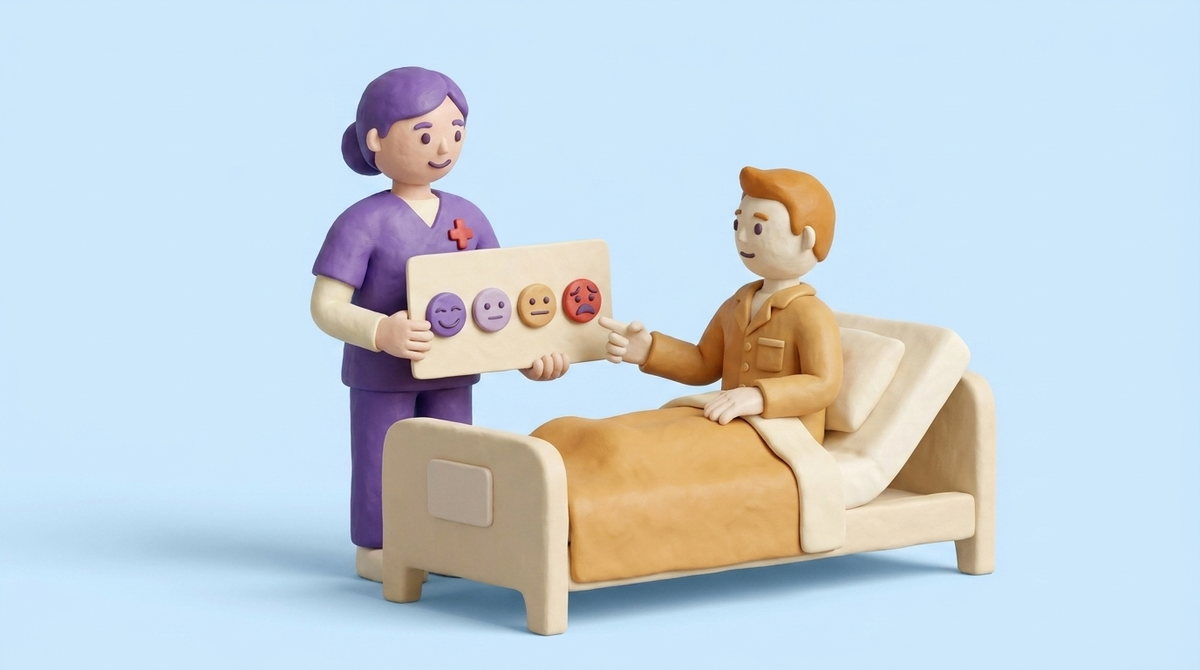
The full details
Why isn't the strongest painkiller always given immediately?
- Some strong painkillers can mask important signs the doctor needs to diagnose the cause — especially in acute abdominal pain before the first examination.
- The right painkiller is chosen by the type of pain and its likely cause, not just its severity.
- After the initial assessment, there is no medical reason to withhold good pain relief even before the diagnosis is complete — that is the modern approach.
Help the team help you
- Describe the pain: burning? pressing? stabbing? Does it come and go or stay constant?
- Point to its location with one finger if you can, and mention if it travels anywhere.
- List what painkillers you tried at home and when — so doses aren't doubled.
- Tell them immediately if the pain worsens while you wait — triage is repeated as conditions change.
 Doesn't wait its turn
- Sudden severe "worst of your life" pain — tell staff immediately, don't wait your turn.
- Pressing chest pain, or abdominal pain with a rigid abdomen — these are priority signs.
Worth knowing
Saying "it's nothing" out of politeness can delay your treatment, and saying "10 out of 10" while calmly scrolling your phone confuses the assessment — precise honesty is the fastest road to relief.
This content is for general health education only and is not medical advice. Always seek guidance from a qualified healthcare professional. In an emergency, call 998.