Half of all "should we go to the ER?" decisions hinge on one piece of information: what's the temperature? The blood pressure? The sugar? Homes with simple measuring tools call the ambulance EARLIER when it truly matters — and spare themselves the unnecessary visits.
In short — what to do
- A digital thermometer — with infants at home: one suitable for rectal readings (most accurate under 3 months).
- A home blood-pressure monitor with a properly sized arm cuff — for any home with someone over forty or with hypertension.
- A glucose meter with in-date strips — in every home with a diabetic.
- A fingertip pulse oximeter — valuable for lung disease, asthma and chest infections.
- A first-aid box: gauze, bandage, plasters, antiseptic, gloves and scissors.
- Fever/pain medicine in adult and child doses + oral rehydration sachets.
- A working flashlight and a charged power bank — emergencies don't wait for the power to return.
This topic’s video is coming soon on our channels — follow us
@lahzaem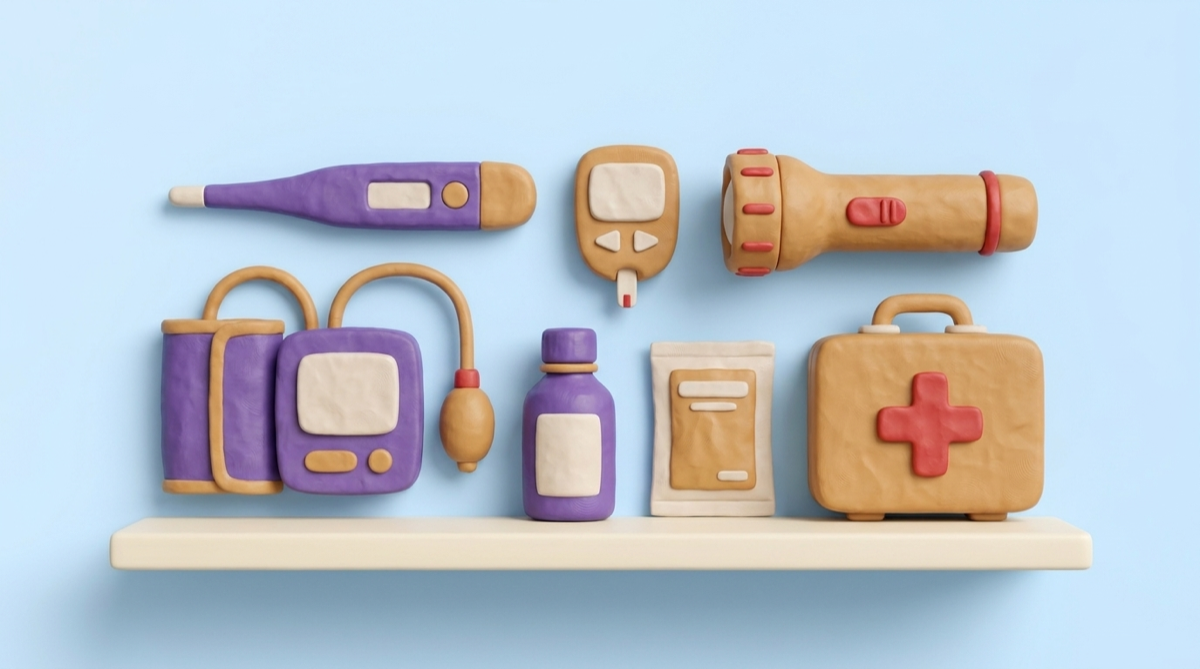
The full details
The essential list
- A digital thermometer — with infants at home: one suitable for rectal readings (most accurate under 3 months).
- A home blood-pressure monitor with a properly sized arm cuff — for any home with someone over forty or with hypertension.
- A glucose meter with in-date strips — in every home with a diabetic.
- A fingertip pulse oximeter — valuable for lung disease, asthma and chest infections.
- A first-aid box: gauze, bandage, plasters, antiseptic, gloves and scissors.
- Fever/pain medicine in adult and child doses + oral rehydration sachets.
- A working flashlight and a charged power bank — emergencies don't wait for the power to return.
Golden storage rules
- One place known to everyone — not "scattered across drawers".
- High and locked away from children, medicines in original packaging.
- An expiry tour every 6 months: device batteries, medicine dates, glucose strips.
 Watch out
- A device that exists but "has no battery" or "expired strips" is worse than none — it gives false reassurance.
- Never treat numbers alone: a child at 37.8 who is limp and not drinking is more worrying than a child at 39 who is playing.
Doctor's tip
Learn your devices in calm, not in crisis — measure your family's blood pressure once over tea, so you know each person's "normal".
This content is for general health education only and is not medical advice. Always seek guidance from a qualified healthcare professional. In an emergency, call 998.