Migraine is attacks of throbbing headache, usually one-sided, lasting hours to days, with nausea and sensitivity to light and sound. Some people get an "aura" first: zigzag lights or tingling. It is exhausting but not dangerous in itself — what matters is knowing when a headache is something else.
In short — what to do
- Act early: your usual painkiller in the first 30–60 minutes works far better than delaying "until it's bad".
- A dark quiet room — light and noise are the attack's fuel.
- A cold compress on the forehead or neck relieves many.
- Drink water — dehydration is a common trigger — and sleep if you can.
- Record your attacks: when, how long, what preceded them (sleep? hunger? foods? period?) — the attack diary opens the door to preventive treatment.
This topic’s video is coming soon on our channels — follow us
@lahzaem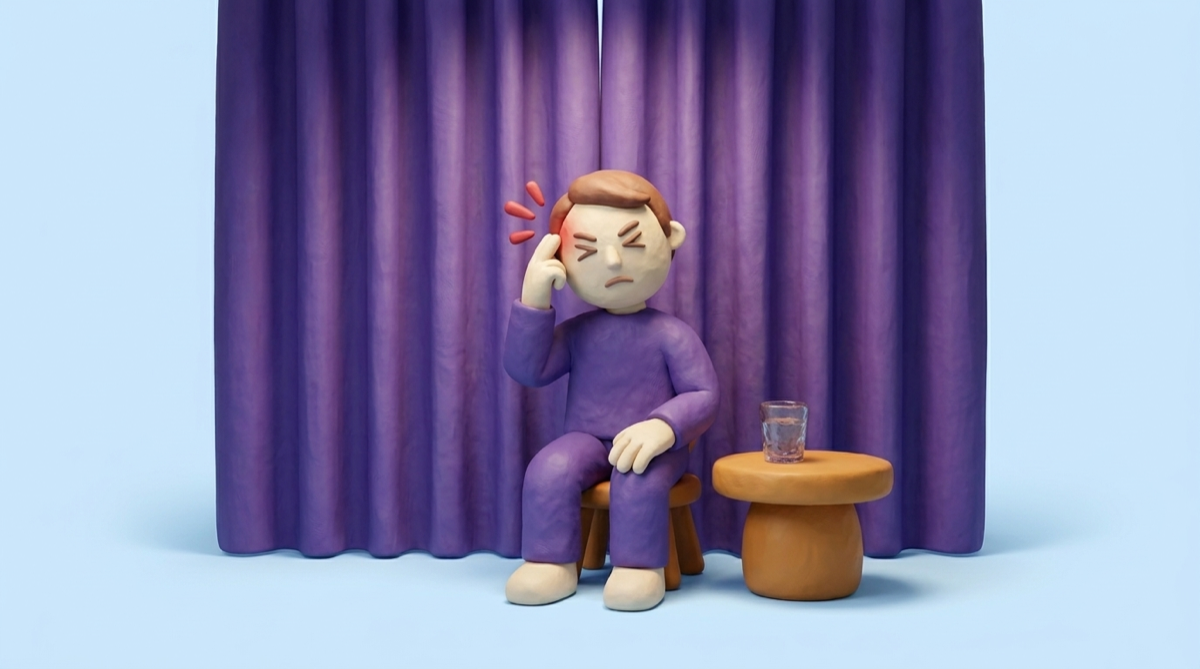
The full details
During the attack: what helps
- Act early: your usual painkiller in the first 30–60 minutes works far better than delaying "until it's bad".
- A dark quiet room — light and noise are the attack's fuel.
- A cold compress on the forehead or neck relieves many.
- Drink water — dehydration is a common trigger — and sleep if you can.
- Record your attacks: when, how long, what preceded them (sleep? hunger? foods? period?) — the attack diary opens the door to preventive treatment.
When does migraine need a doctor?
- Frequent attacks disrupting work or study (more than 4 days a month) — preventive treatment can change your life.
- Painkillers no longer work, or you use them more than 10–15 days a month (medication-overuse headache is real).
- Your known headache pattern changes.
 This is NOT migraine — ER immediately
- A thunderclap headache peaking within seconds ("worst of my life").
- Headache with fever and stiff neck, or a rash.
- With limb weakness, speech disturbance, or confusion — could be a stroke.
- A completely new headache after fifty, or after a head injury.
One moment
A migraineur knows their attacks like a fingerprint — the real danger is the headache that "doesn't feel like yours". The new and different goes to the ER, not the familiar and painful.
This content is for general health education only and is not medical advice. Always seek guidance from a qualified healthcare professional. In an emergency, call 998.