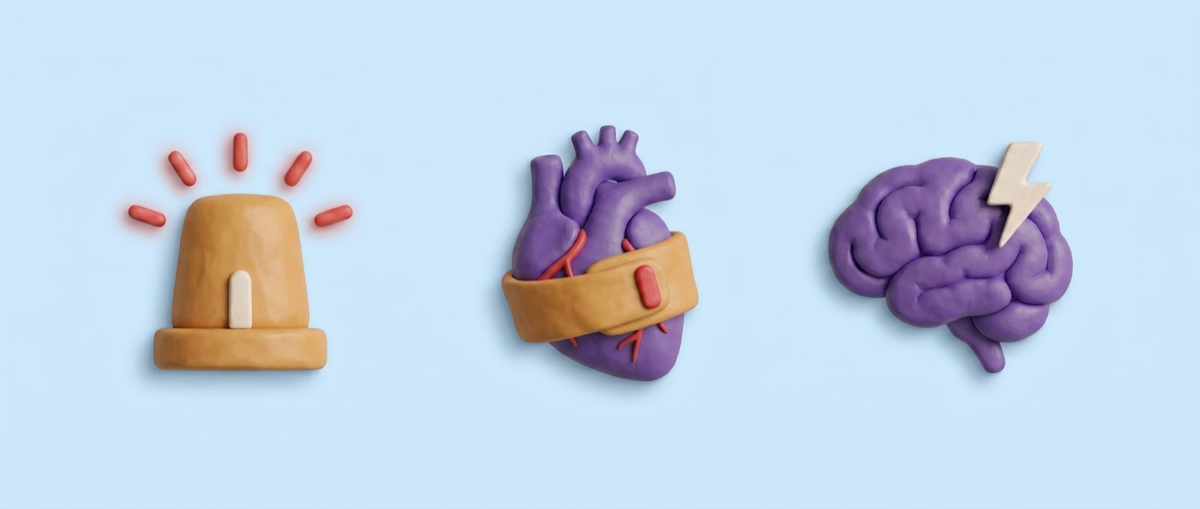
Chest pain has many causes: muscular, digestive, respiratory… but the most dangerous is a heart attack, where every minute of delay means more heart muscle dying. The golden rule: worrying chest pain is assessed in the ER, not at home.
In short — what to do
- Call 998 — never drive yourself to the hospital; losing consciousness at the wheel kills.
- Sit or lie half-upright in a comfortable position and stay calm.
- Loosen tight clothing; don't eat or drink.
- If you use prescribed angina medicine (nitroglycerin), take it as your doctor instructed.
- If the person collapses and stops breathing: start CPR immediately.
Videos for this topic
When is chest pain dangerous?
45 secondsNot every chest pain is a heart attack — and the signs that cannot wait.
Watch it on InstagramThe heart attack that doesn’t start with chest pain
48 secondsFatigue, nausea or breathlessness with no clear pain — especially in women and older adults, and why every minute of delay costs heart muscle.

Red flags — call 998 immediately
- Pressure, heaviness or squeezing in the center of the chest lasting more than a few minutes, or coming and going.
- Pain spreading to the arm (especially left), jaw, neck, or back.
- Accompanied by cold sweat, nausea, dizziness, or shortness of breath.
- Sudden severe "tearing" pain radiating to the back.
- Chest pain with severe palpitations or fainting.
What to do until the ambulance arrives
- Call 998 — never drive yourself to the hospital; losing consciousness at the wheel kills.
- Sit or lie half-upright in a comfortable position and stay calm.
- Loosen tight clothing; don't eat or drink.
- If you use prescribed angina medicine (nitroglycerin), take it as your doctor instructed.
- If the person collapses and stops breathing: start CPR immediately.
About aspirin
The 998 dispatcher may ask you to chew an aspirin if you have no allergy or contraindication — follow their instructions, and don't take other medicines on your own.
 Common mistakes
- "I'll wait until morning and see" — a heart attack doesn't wait.
- Driving yourself or with a relative instead of the ambulance — the ambulance crew starts treatment the moment they arrive.
- Dismissing the pain as "gas" just because burping relieved it briefly.
This content is for general health education only and is not medical advice. Always seek guidance from a qualified healthcare professional. In an emergency, call 998.