Most nosebleeds come from small vessels at the front of the nasal septum and stop with correct pressure. The problem is that most people do the exact opposite: they tip the head back.
In short — what to do
- Sit and tilt the head slightly forward — not back.
- Pinch the soft part of the nose (just below the bone) between thumb and index finger.
- Hold for a full 10 minutes without lifting to check — every peek restarts the clock.
- Breathe through the mouth; a cold compress on the bridge of the nose may help.
- Once it stops: don’t blow the nose, don’t put anything in it, and avoid bending and exertion for a few hours.
This topic’s video is coming soon on our channels — follow us
@lahzaem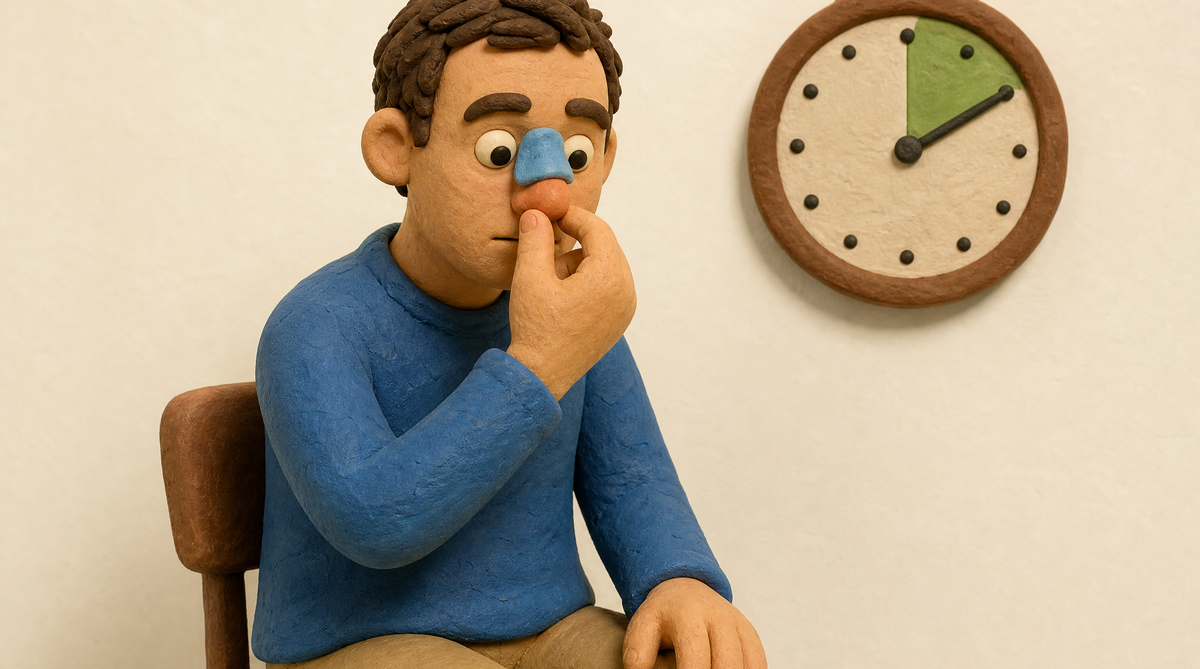
Why is head-back wrong?
Because the blood runs down the throat and is swallowed — irritating the stomach and causing nausea and vomiting — and, more importantly, you can no longer tell how much has actually been lost, with some risk of blood entering the airway.
The right method
- Sit and tilt the head slightly forward — not back.
- Pinch the soft part of the nose (just below the bone) between thumb and index finger.
- Hold for a full 10 minutes without lifting to check — every peek restarts the clock.
- Breathe through the mouth; a cold compress on the bridge of the nose may help.
- Once it stops: don’t blow the nose, don’t put anything in it, and avoid bending and exertion for a few hours.
 Go to the ER if
- Bleeding continues after 20 minutes of correct, uninterrupted pressure.
- The bleeding is heavy, or a lot of blood runs into the throat despite tilting forward.
- It followed an injury or a heavy blow to the face or head.
- The person takes blood thinners or has a clotting disorder.
- Pallor, dizziness or a racing pulse appear.
- Nosebleeds recur frequently over a short period, or come from one nostril in an older adult with no clear cause.
Prevention
Dry air and air-conditioning dry the nasal lining. A humidifier, or a little moisturising ointment inside the nostril, reduces recurrence — and trimming children’s nails removes their commonest cause.
This content is for general health education only and is not medical advice. Always seek guidance from a qualified healthcare professional. In an emergency, call 998.