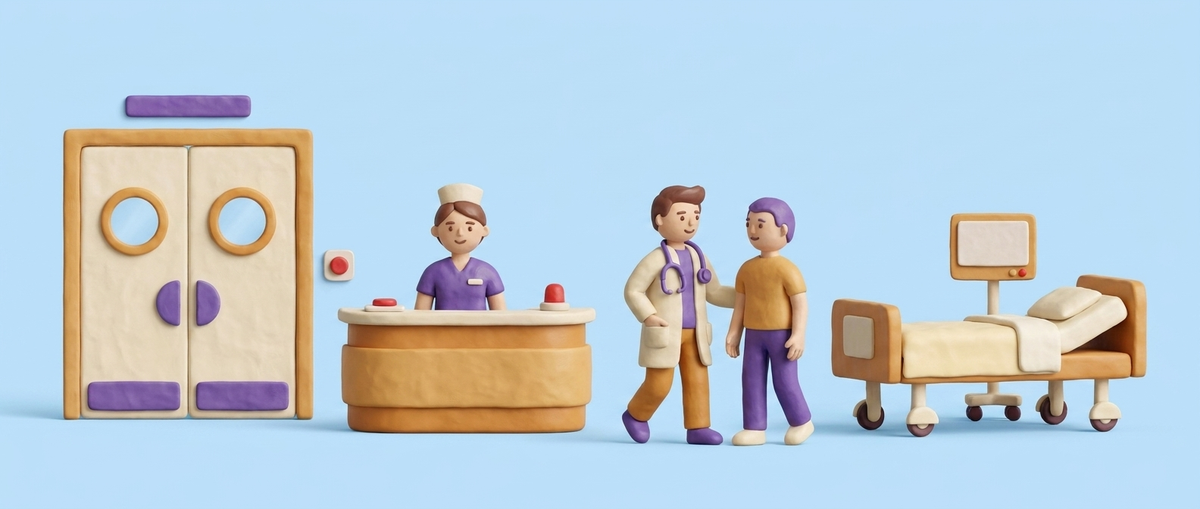
When you might need surgery, anaesthesia or endoscopy, the team says: "complete fasting from now". The reason: under anaesthesia the upper oesophageal muscle relaxes, and a full stomach can send its contents back into the lungs — one of anaesthesia's most dangerous yet most preventable complications.
In short — what to do
- No food, no drink, no gum, no sweets — not even water unless the team explicitly allows it.
- Some acute abdominal pains require fasting from arrival until the surgery decision is settled.
- Fasting times before planned anaesthesia follow known rules — in emergencies a faster decision may be taken by weighing the risks.
This topic’s video is coming soon on our channels — follow us
@lahzaem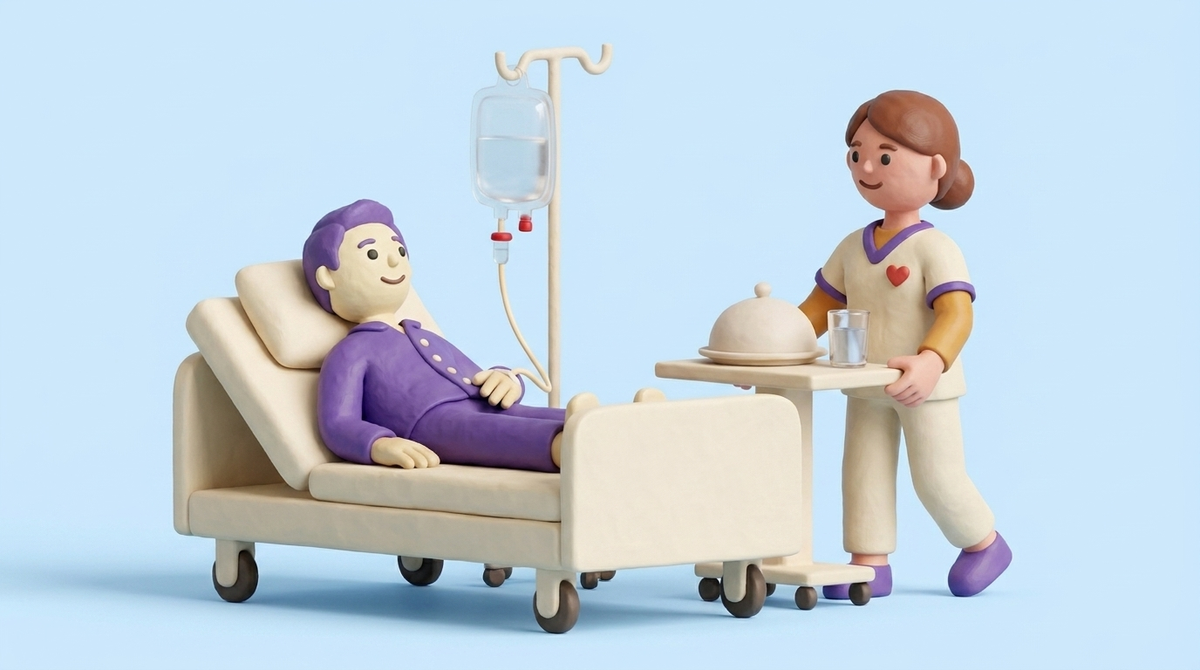
The full details
What does fasting mean here?
- No food, no drink, no gum, no sweets — not even water unless the team explicitly allows it.
- Some acute abdominal pains require fasting from arrival until the surgery decision is settled.
- Fasting times before planned anaesthesia follow known rules — in emergencies a faster decision may be taken by weighing the risks.
Legitimate questions
- "Am I still fasting? Until when?" — ask whenever the wait grows long; the decision may have changed.
- A fasting diabetic: tell the team about your medicines immediately — some are paused during fasting to avoid low sugar.
- Tell them honestly if you ate or drank anything — it changes the anaesthesia timing, and hiding it endangers you.
Worth knowing
The cannula and IV fluids replace what you need while fasting — you won't be left thirsty. And fasting that stretches on without clear reason deserves a polite question to the team: "is it still necessary?"
This content is for general health education only and is not medical advice. Always seek guidance from a qualified healthcare professional. In an emergency, call 998.