In a diabetic — especially an older adult with type 2 — sugar can climb gradually to very high numbers (sometimes past 600 mg/dL) with severe dehydration that pulls water out of the whole body. This is called hyperosmolar hyperglycaemic state (HHS), and its usual triggers are: infection (urinary or chest), stopped medication, or too little water in the heat.
In short — what to do
- Check the sugar now if a meter is available — repeated readings above 400, or "HI", is a real alarm.
- Water in frequent sips — water only, no juices or sweetened drinks.
- Do not stop insulin or diabetes medication — keep the prescribed doses.
- Look for the trigger: fever? burning urine? cough? — and see a doctor today, not tomorrow.
This topic’s video is coming soon on our channels — follow us
@lahzaem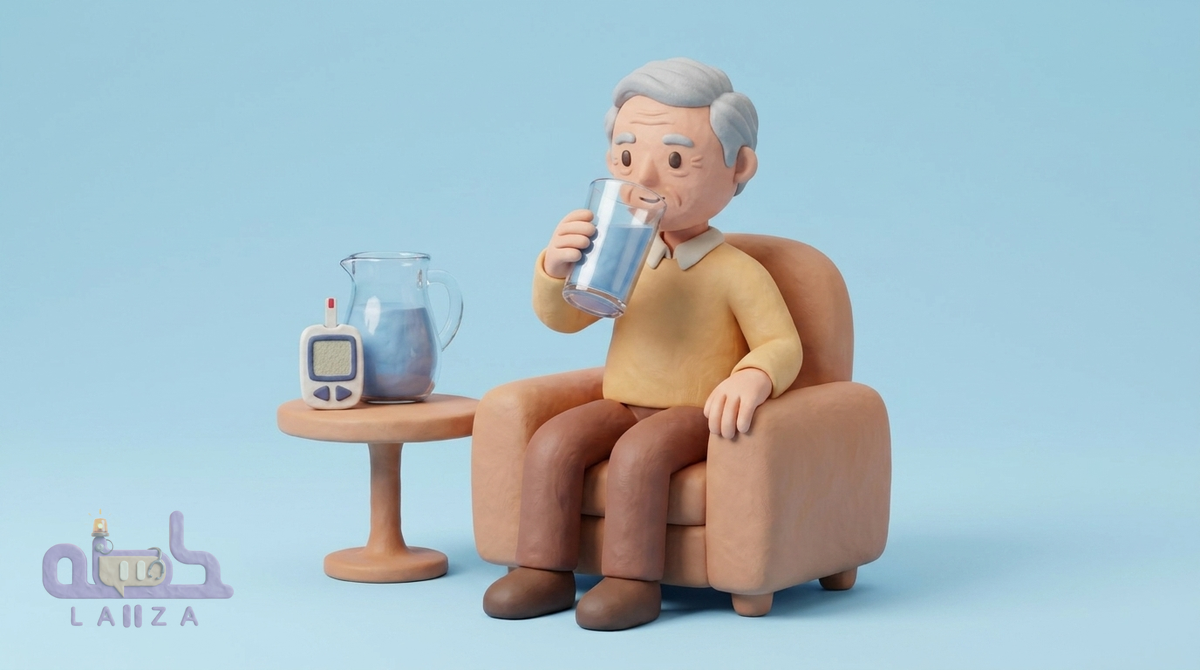
The signs — building over days
- Thirst that won't quench, dry mouth and skin.
- Lots of urine at first — then less as dehydration deepens.
- Fatigue and drowsiness growing day after day.
- Confusion, strange speech, or out-of-character behaviour.
- And in severe cases: seizure or difficulty waking — coma.
Awake and able to drink?
- Check the sugar now if a meter is available — repeated readings above 400, or "HI", is a real alarm.
- Water in frequent sips — water only, no juices or sweetened drinks.
- Do not stop insulin or diabetes medication — keep the prescribed doses.
- Look for the trigger: fever? burning urine? cough? — and see a doctor today, not tomorrow.
Go to the ER immediately if
- Unusual drowsiness, confusion, or difficulty waking them.
- Repeated vomiting that prevents drinking, or refusal of fluids.
- Sugar above 400 that won't come down despite water and medication.
- Deep rapid breathing or a "fruity" smell on the breath — especially in type 1, this may be diabetic ketoacidosis, faster and more dangerous.
- Fever with chills — infection is this condition's fuel.
 Common mistakes
- Stopping insulin during illness "because they're barely eating" — the most dangerous mistake; a sick body needs it more, not less.
- Quenching the thirst with juices and soft drinks — pouring oil on the fire.
- Unconscious? Never anything in the mouth: recovery position and call 998 immediately.
The sick-day rule
When a diabetic falls ill: check more, drink more water, and never stop the medication. And remember the triad: unquenchable thirst + lots of urine + a clouding mind = ER today, not tomorrow.
This content is for general health education only and is not medical advice. Always seek guidance from a qualified healthcare professional. In an emergency, call 998.