A seizure is a temporary electrical storm in the brain. Most stop on their own within one to two minutes — your role is not to "stop it" but to prevent harm during and after. Your watch is the most important tool in the whole scene.
In short — what to do
- Look at your watch and note the start time — the most important information you'll give any doctor.
- Move away everything harmful: chairs, corners, sharp objects — and never try to restrain them or stop the shaking.
- Put something soft under the head (cushion, folded jacket).
- NOTHING in the mouth, ever — no spoon, no fingers, no water. Nobody "swallows their tongue".
- After the shaking stops: roll them onto their side (recovery position) so saliva drains and the airway stays open.
- Stay until fully awake — they'll wake confused and exhausted; reassure with short calm sentences.
This topic’s video is coming soon on our channels — follow us
@lahzaem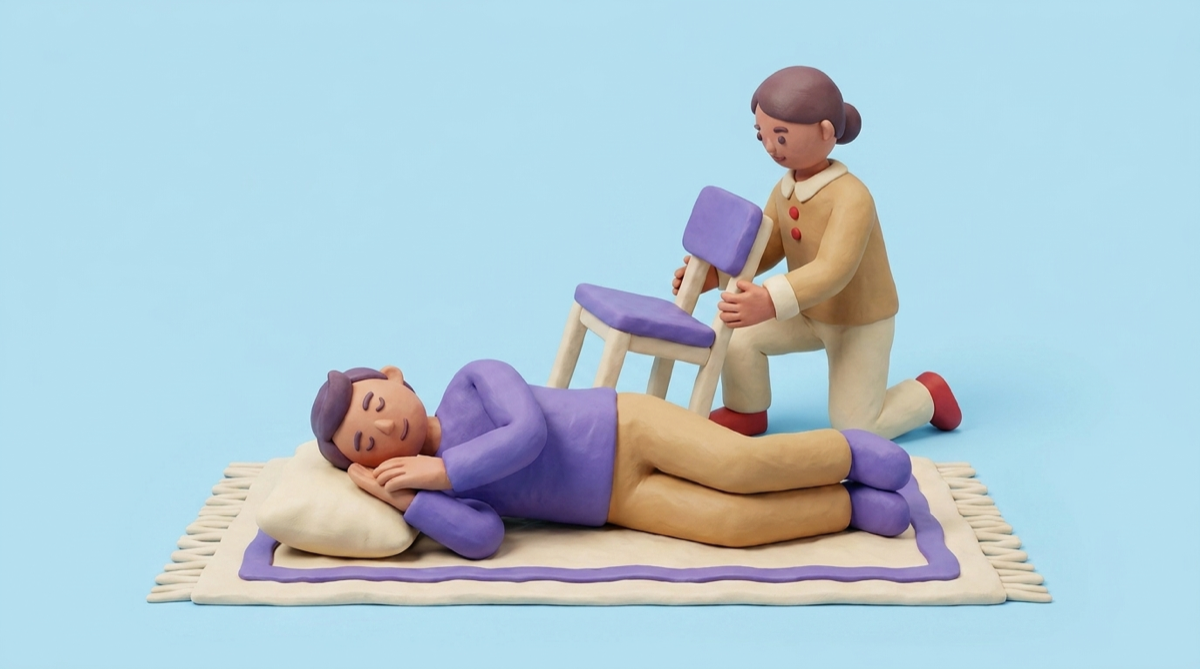
The full details
During the seizure
- Look at your watch and note the start time — the most important information you'll give any doctor.
- Move away everything harmful: chairs, corners, sharp objects — and never try to restrain them or stop the shaking.
- Put something soft under the head (cushion, folded jacket).
- NOTHING in the mouth, ever — no spoon, no fingers, no water. Nobody "swallows their tongue".
- After the shaking stops: roll them onto their side (recovery position) so saliva drains and the airway stays open.
- Stay until fully awake — they'll wake confused and exhausted; reassure with short calm sentences.
 Call 998 if
- The seizure passes 5 minutes, or seizures follow each other without waking between.
- Their first-ever seizure, an injury during it, or it happened in water.
- Pregnancy, diabetes, or not waking normally afterwards.
- Breathing difficulty or blueness after the seizure stops.
For the epilepsy patient and family
Medication adherence, enough sleep, avoiding your known triggers — then tell those around you what to do: an epilepsy patient's greatest protection is a circle that knows this page.
This content is for general health education only and is not medical advice. Always seek guidance from a qualified healthcare professional. In an emergency, call 998.