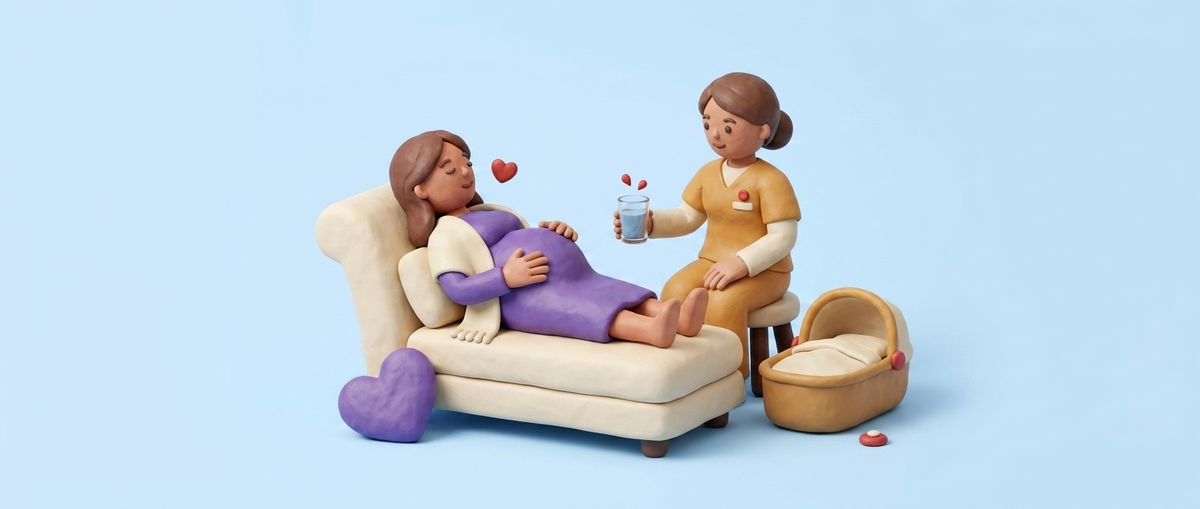
After birth, lochia continues for weeks: blood fading gradually from red to pink to brown to yellowish. That's normal — abnormal is a return to heavy red, large clots, or bleeding beyond what pads can handle. Late heavy bleeding can mean retained placenta or infection.
In short — what to do
- Count pads daily for the first two weeks — the most accurate home measure.
- Empty the bladder regularly and breastfeed — both help the uterus contract.
- For sudden heavy bleeding: lie down, massage the lower abdomen firmly over the uterus, and call 998.
This topic’s video is coming soon on our channels — follow us
@lahzaem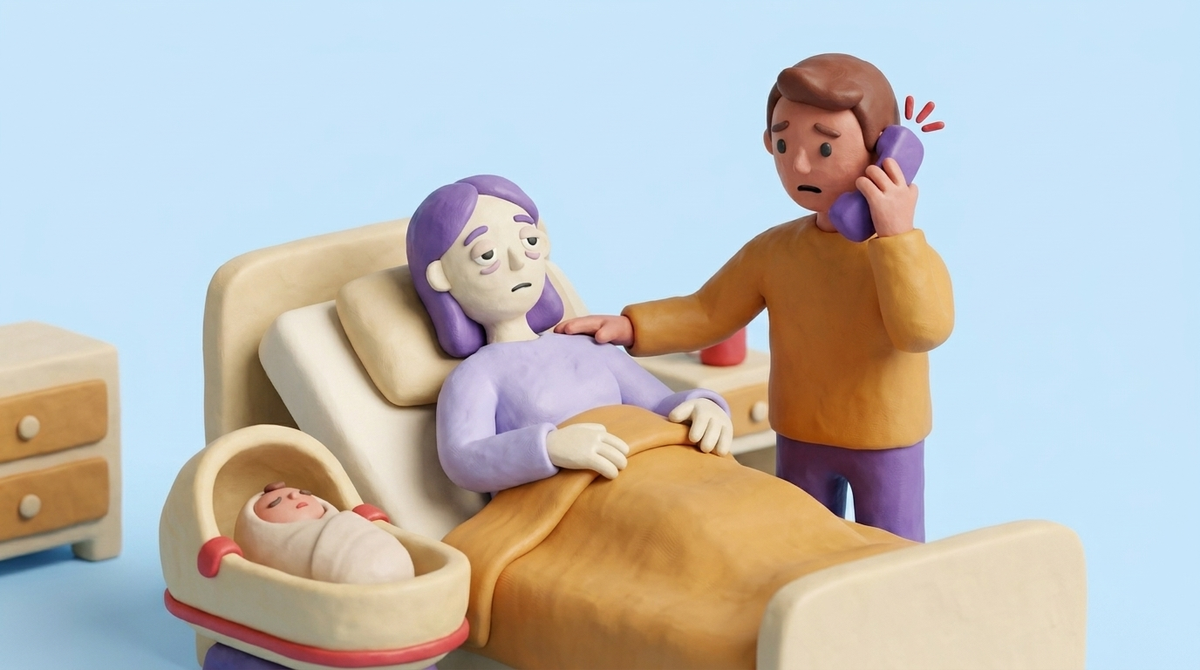
The full details
Normal versus worrying
- Normal: blood lightening day by day, briefly heavier with breastfeeding or activity then easing again.
- Worrying: a pad soaked within an hour or two, egg-sized clots, heavy red blood returning after it had eased, or foul-smelling blood.
- Also worrying: fever, chills, increasing abdominal pain, or unexplained dizziness and weakness.
What to do
- Count pads daily for the first two weeks — the most accurate home measure.
- Empty the bladder regularly and breastfeed — both help the uterus contract.
- For sudden heavy bleeding: lie down, massage the lower abdomen firmly over the uterus, and call 998.
 998 immediately if
- A pad soaking in under an hour or repeated large clots.
- Dizziness, fainting, racing pulse, or pallor.
- Fever ≥38 with the bleeding, or severe abdominal pain.
- And: dark thoughts or life-paralysing sadness after birth — a real psychiatric emergency that is treatable (see the urgent-anxiety guide).
For the mother's family
Amid the celebration of the newborn, appoint one person whose only job is the daily question: "How is your bleeding? Your sleep? Your heart?" — a supported mother means a whole healthy home.
This content is for general health education only and is not medical advice. Always seek guidance from a qualified healthcare professional. In an emergency, call 998.