
Stomach bugs visit every child, and most are viral and self-limiting within days. Your job is not to "stop the diarrhoea" but something more important: replace fluids as they're lost so losses never outrun drinking.
In short — what to do
- Oral rehydration solution (ORS) is the hero: from the pharmacy, prepared per instructions — small frequent sips (a spoon per minute if needed) beat a full cup vomited back.
- After every loose stool or vomit: 50–100 ml of solution for a small child, more for older ones.
- Continue breastfeeding as usual — never stop it — and offer light food to eaters whenever they want.
- Avoid: concentrated juices and fizzy drinks (worsen diarrhoea), and anti-diarrhoea medicines for children (dangerous without prescription).
- Check dehydration signs at least twice daily — list below.
This topic’s video is coming soon on our channels — follow us
@lahzaem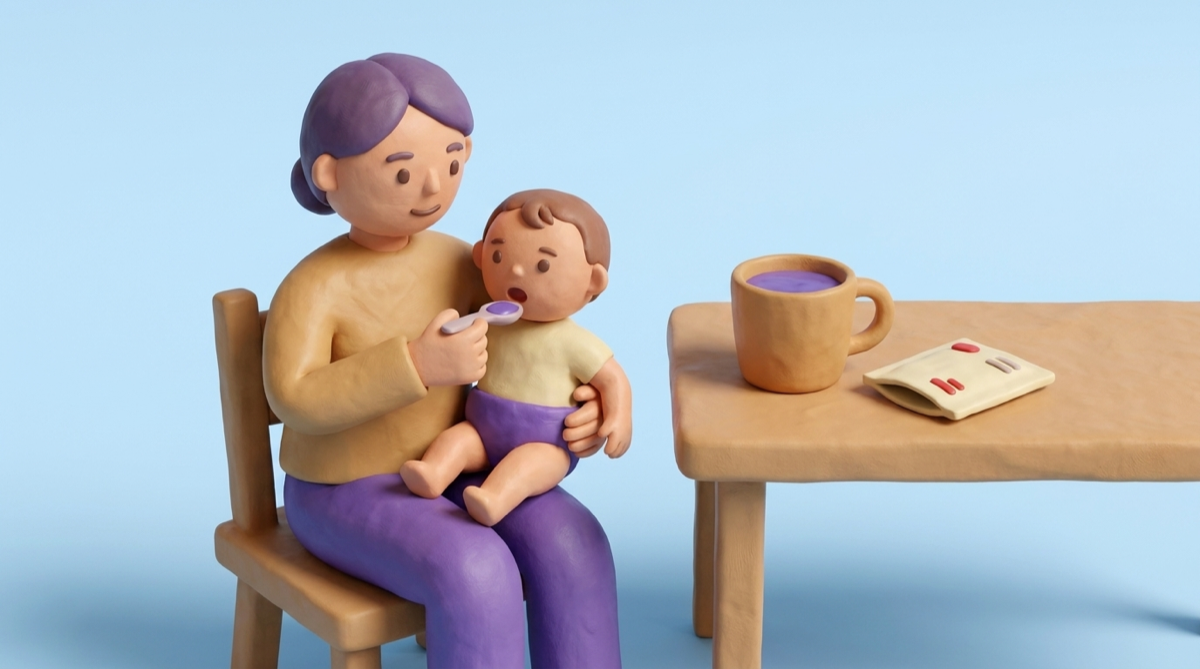
The full details
The home plan
- Oral rehydration solution (ORS) is the hero: from the pharmacy, prepared per instructions — small frequent sips (a spoon per minute if needed) beat a full cup vomited back.
- After every loose stool or vomit: 50–100 ml of solution for a small child, more for older ones.
- Continue breastfeeding as usual — never stop it — and offer light food to eaters whenever they want.
- Avoid: concentrated juices and fizzy drinks (worsen diarrhoea), and anti-diarrhoea medicines for children (dangerous without prescription).
- Check dehydration signs at least twice daily — list below.
Dehydration signs: check them yourself
- Clearly drier nappies, or no urine for 6–8 hours.
- Dry mouth and tongue, crying with few or no tears.
- Sunken eyes, or a sunken fontanelle in infants.
- Lethargy and poor interaction — the most important sign of all.
 To the ER if
- Dehydration signs despite replacement efforts, or total refusal to drink.
- Green (bilious) vomit, or blood in stool or vomit.
- Marked lethargy or a child who is simply "not themselves".
- An infant under 3 months with fever, or severe persistent abdominal pain.
One moment
The smart parent's rule: don't ask "how many stools?" but "how much drunk, how much urine?" — the fluid balance is the whole story, and spoon-by-spoon ORS is patience that saves.
This content is for general health education only and is not medical advice. Always seek guidance from a qualified healthcare professional. In an emergency, call 998.