
Most travel health problems are small and predictable: fever, diarrhoea, a minor cut, motion sickness. A well-planned pouch-sized kit solves 90% of them — and more important still: your personal medicines and their papers.
In short — what to pack for the trip
- Your regular medicines in quantities for the trip + spare days, in original packaging, with a medical report or prescription (some countries ask at the airport).
- Fever reducer and pain relief (paracetamol ± ibuprofen) in adult and child doses.
- Oral rehydration sachets (ORS) — the single most valuable item when travelling with children.
- Plasters in several sizes, gauze and a bandage, and a small wound antiseptic.
- A thermometer, and motion-sickness tablets if you're prone.
- Sunscreen, and a soothing cream for insect bites.
- Your usual allergy medicines — and anyone with an epinephrine pen carries it in hand luggage, never checked baggage.
This topic’s video is coming soon on our channels — follow us
@lahzaem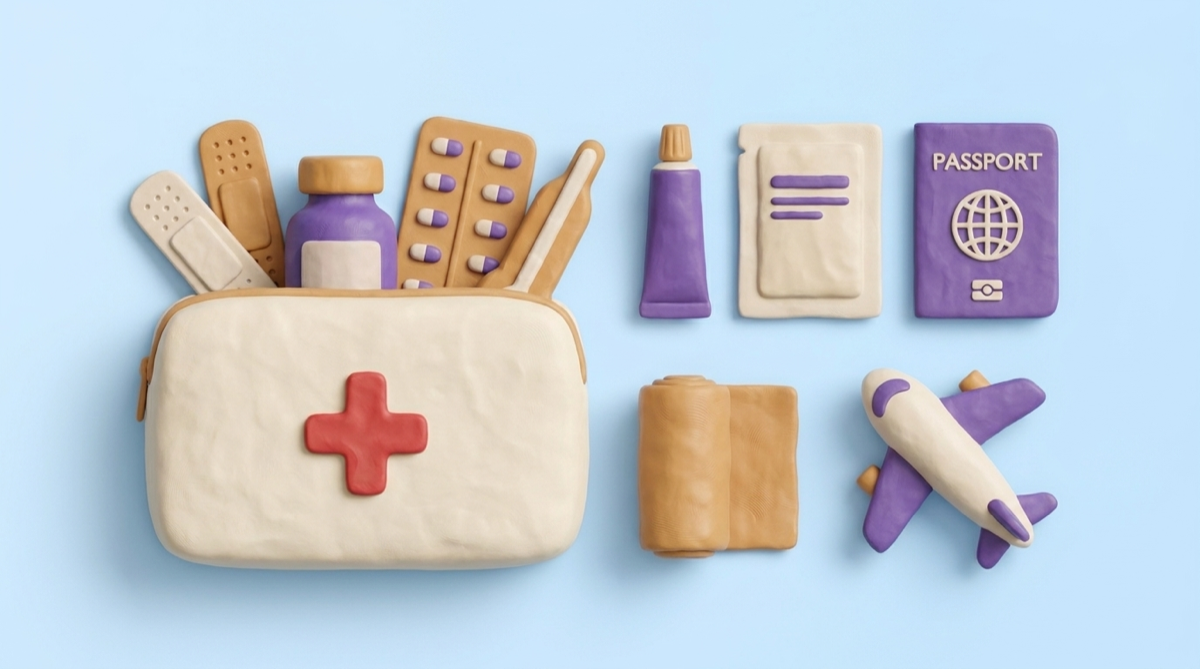
The full details
The essential travel kit
- Your regular medicines in quantities for the trip + spare days, in original packaging, with a medical report or prescription (some countries ask at the airport).
- Fever reducer and pain relief (paracetamol ± ibuprofen) in adult and child doses.
- Oral rehydration sachets (ORS) — the single most valuable item when travelling with children.
- Plasters in several sizes, gauze and a bandage, and a small wound antiseptic.
- A thermometer, and motion-sickness tablets if you're prone.
- Sunscreen, and a soothing cream for insect bites.
- Your usual allergy medicines — and anyone with an epinephrine pen carries it in hand luggage, never checked baggage.
Golden rules for the plane and airport
- ALL important medicines go in hand luggage — checked bags get lost and delayed.
- Diabetes: insulin stays with you in the cabin (the hold freezes), with a snack and fast sugar within reach.
- Check the destination country's medicine rules before flying (some painkillers and sedatives are banned in certain countries).
 Seek care during your trip if
- Fever beyond 48 hours or bloody diarrhoea.
- Dehydration in a child: little urine, lethargy, crying without tears.
- Chest pain, breathlessness, or a painful swollen leg after a long journey — do not postpone.
Doctor's tip
Photograph your prescriptions, reports and insurance card and keep them on your phone and email — a digital copy in the cloud has rescued many travellers who lost their bags.
This content is for general health education only and is not medical advice. Always seek guidance from a qualified healthcare professional. In an emergency, call 998.