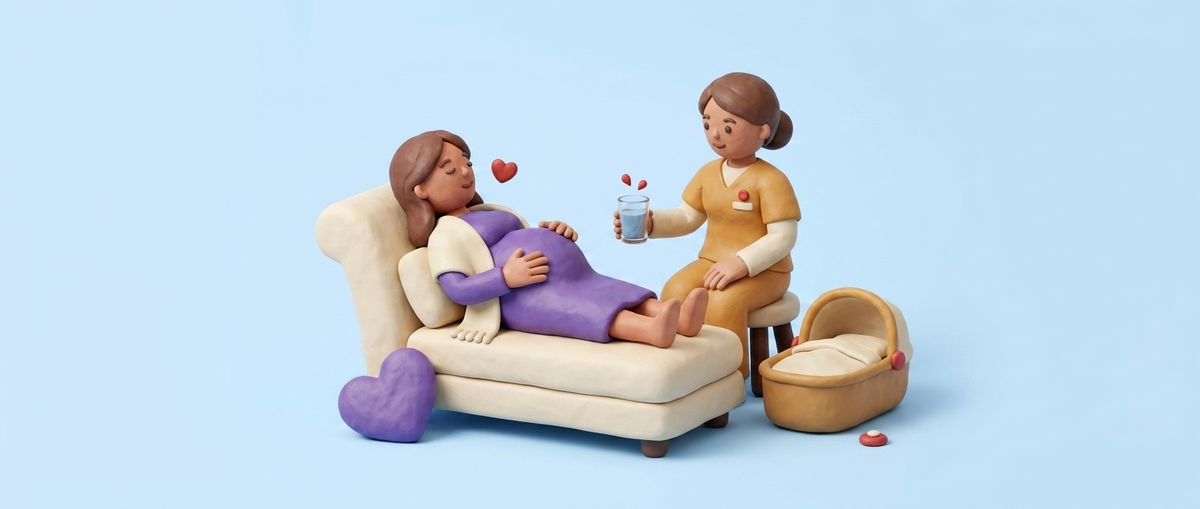
Pre-eclampsia is a pregnancy-specific blood-pressure disorder affecting vessels, kidneys and liver — and it can progress silently. Its danger: it threatens mother and baby together. Its mercy: it is detectable early through pressure checks and tests.
In short — what to do
- Check your pressure if a home monitor exists — 140/90 or more in pregnancy is a number never to ignore.
- Call your doctor today with any sign from the list — don't wait for the routine visit.
- Never skip antenatal visits — the pressure check and urine test each visit are the safety net.
This topic’s video is coming soon on our channels — follow us
@lahzaem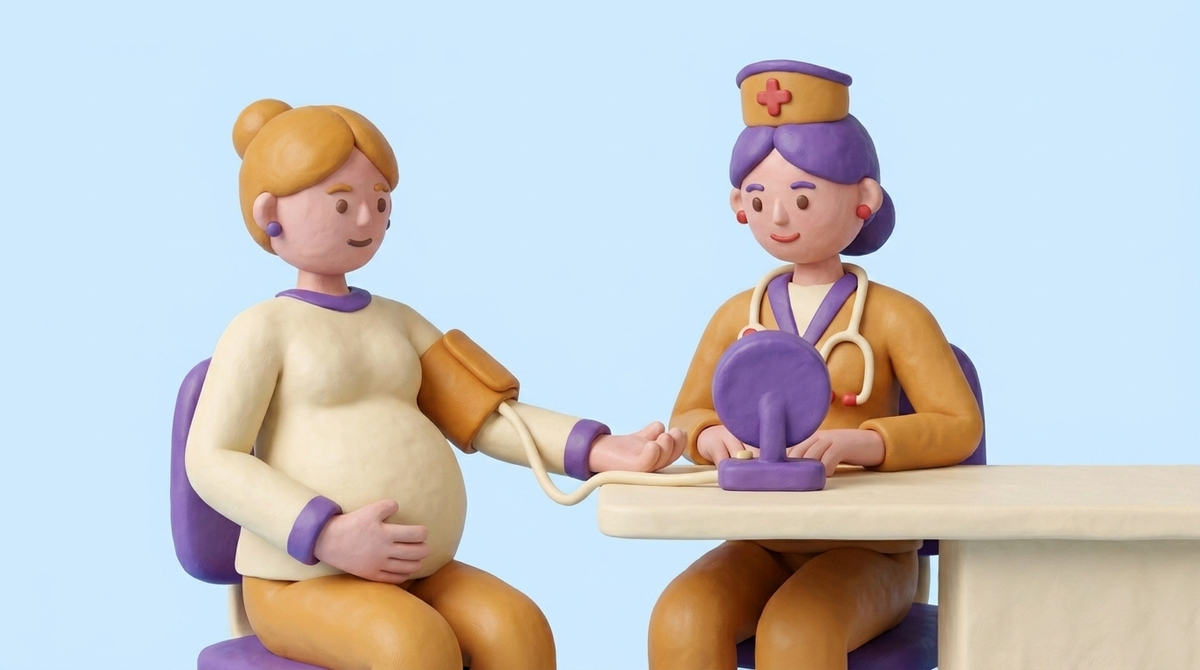
The full details
Signs never to dismiss after week 20
- A persistent headache not answering paracetamol.
- Visual disturbance: blurring, flashes, or dark spots.
- Pain in the right upper abdomen or under the ribs.
- Sudden swelling of face and hands (different from usual evening foot swelling).
- Rapid weight gain over days, or new breathlessness.
What to do
- Check your pressure if a home monitor exists — 140/90 or more in pregnancy is a number never to ignore.
- Call your doctor today with any sign from the list — don't wait for the routine visit.
- Never skip antenatal visits — the pressure check and urine test each visit are the safety net.
 ER immediately (998) if
- Violent headache with visual disturbance or upper-abdominal pain — may precede a seizure by hours.
- An eclamptic seizure: act as with any seizure (protect, side, nothing in the mouth) and 998 immediately.
- Pressure ≥160/110, severe breathlessness, or clearly reduced fetal movement.
One moment
A pregnant woman's headache after week 20 is never "normal pregnancy headache" until someone measures her pressure — a home BP monitor in every pregnant household protects two lives.
This content is for general health education only and is not medical advice. Always seek guidance from a qualified healthcare professional. In an emergency, call 998.