
COPD (usually from long smoking) makes breathing a daily effort. A "flare" is deterioration faster than usual — often an infection — and every neglected flare leaves the lung weaker than before.
In short — what to do
- Start your reliever inhaler at increased doses per your plan — and sit leaning forward (the table position).
- Pursed-lip breathing: in through the nose, slow out through nearly-closed lips — it releases the trapped air.
- Contact your doctor early — many patients have a ready "rescue plan" of medicines for flares.
- Home oxygen user: stay on your prescribed flow — never raise it yourself; in some patients more oxygen harms.
- No smoking, and none around you — the most important treatment of all.
This topic’s video is coming soon on our channels — follow us
@lahzaem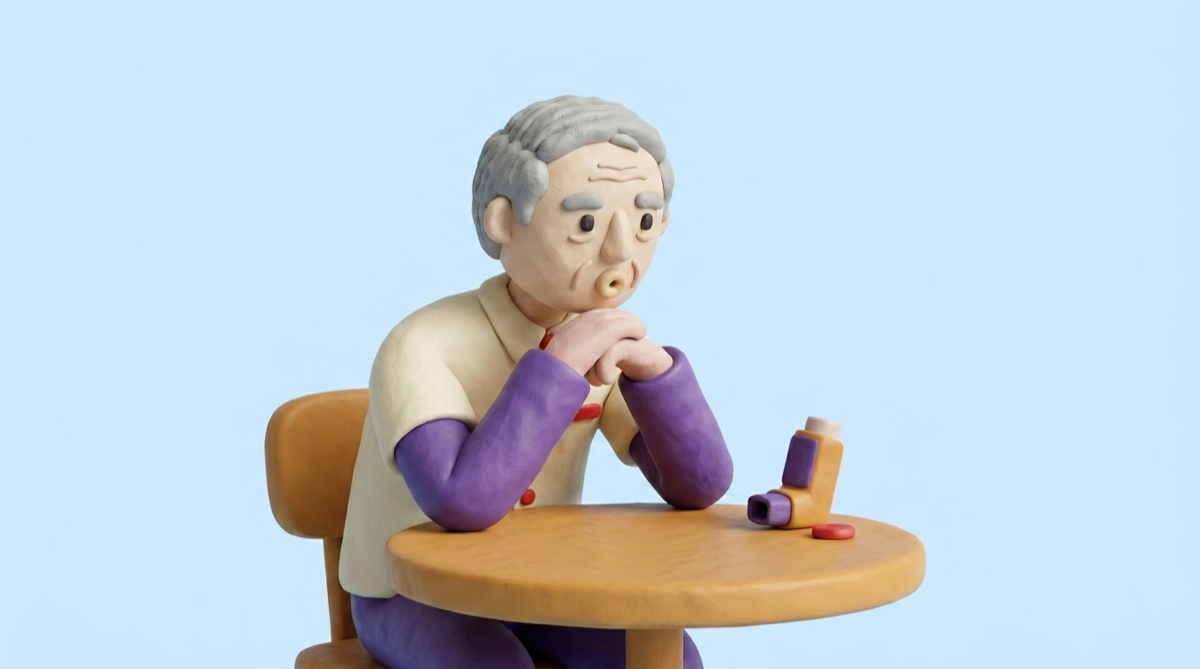
The full details
Signs of a flare
- Breathlessness worse than usual and not answering the usual inhaler.
- More phlegm, or darker phlegm (yellow/green).
- Worse cough, new wheeze, or fever.
- Unusual fatigue or new daytime drowsiness — may mean carbon-dioxide retention.
What to do
- Start your reliever inhaler at increased doses per your plan — and sit leaning forward (the table position).
- Pursed-lip breathing: in through the nose, slow out through nearly-closed lips — it releases the trapped air.
- Contact your doctor early — many patients have a ready "rescue plan" of medicines for flares.
- Home oxygen user: stay on your prescribed flow — never raise it yourself; in some patients more oxygen harms.
- No smoking, and none around you — the most important treatment of all.
 To the ER immediately (998) if
- Severe distress despite inhalers — broken speech.
- Blue lips or fingertips.
- Confusion, severe drowsiness, or hard to wake.
- New chest pain or coughing blood.
One moment
A COPD patient knows their body better than any machine — if they tell you "my breathing is different today", believe them and act. An early flare is treated in clinic; a late one in the ICU.
This content is for general health education only and is not medical advice. Always seek guidance from a qualified healthcare professional. In an emergency, call 998.