A bruise (contusion) is minor bleeding under the skin after a blow, with no open wound — its colour shifts from red to blue-purple to yellow as it heals. A sprain is torn joint ligaments after a wrong movement; a strain is tearing or overload in the muscle itself. What they share: swelling, pain — and one first-aid approach.
In short — what to do
- Rest: stop playing or working immediately — pushing "through the pain" widens the injury.
- Ice: a cold pack or ice wrapped in cloth for 15–20 minutes, repeated every 2–3 hours on day one — never ice directly on skin.
- Compress: an elastic bandage around the area — firm, not strangling: numbness or blue colour means loosen it.
- Elevate: keep the injured limb raised above heart level when possible to limit swelling.
This topic’s video is coming soon on our channels — follow us
@lahzaem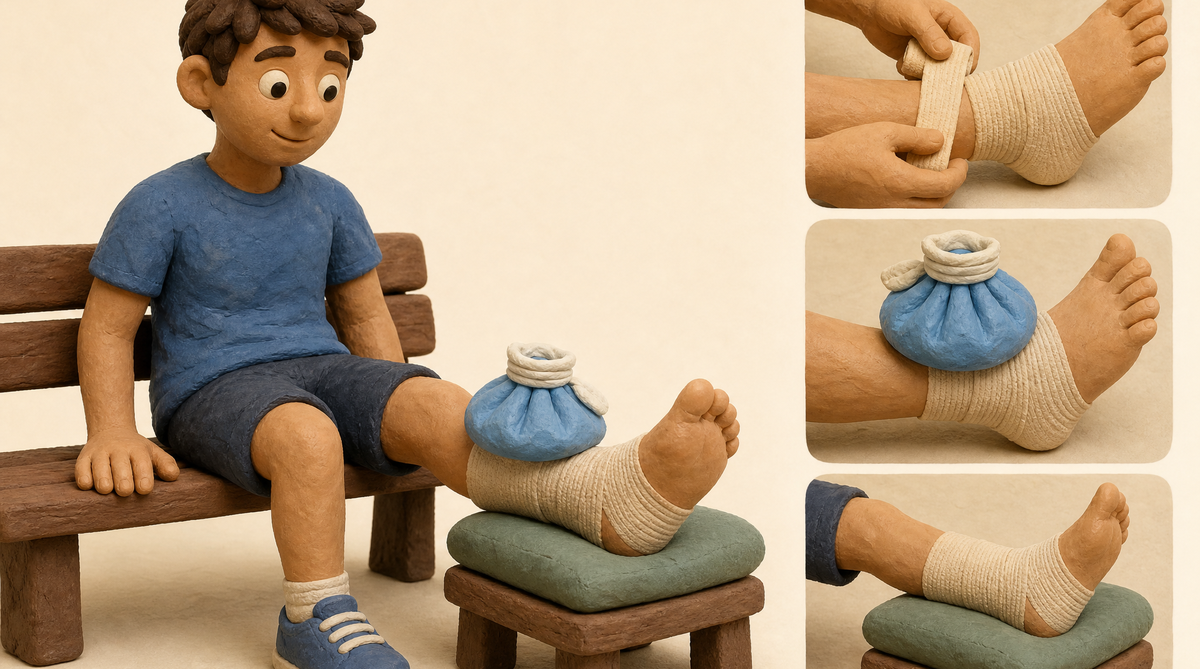
The R.I.C.E rule — four steps
- Rest: stop playing or working immediately — pushing "through the pain" widens the injury.
- Ice: a cold pack or ice wrapped in cloth for 15–20 minutes, repeated every 2–3 hours on day one — never ice directly on skin.
- Compress: an elastic bandage around the area — firm, not strangling: numbness or blue colour means loosen it.
- Elevate: keep the injured limb raised above heart level when possible to limit swelling.
Sudden muscle cramp
A painful sudden spasm that "locks" the muscle for minutes — stop, gently stretch the muscle against the direction of the cramp, then massage it calmly. Cramps love dehydration and exertion in the heat; water is half the prevention.
 When is it more than a bruise? Go to the ER
- Pain that cannot bear weight — unable to walk four steps or move the joint.
- Visible deformity of the limb or joint — possibly a fracture or dislocation: immobilize, never try to "put it back".
- Numbness, coldness or pallor in the limb after the injury.
- Rapid severe swelling, or a bruise that keeps growing — especially on blood thinners.
Dislocation
If a joint pops out of place (shoulder, finger…), never try to relocate it yourself however easy it looks — immobilize it as it is, apply a cold pack, and go to the ER. A home "reduction" can fracture bone or injure nerves and vessels.
This content is for general health education only and is not medical advice. Always seek guidance from a qualified healthcare professional. In an emergency, call 998.