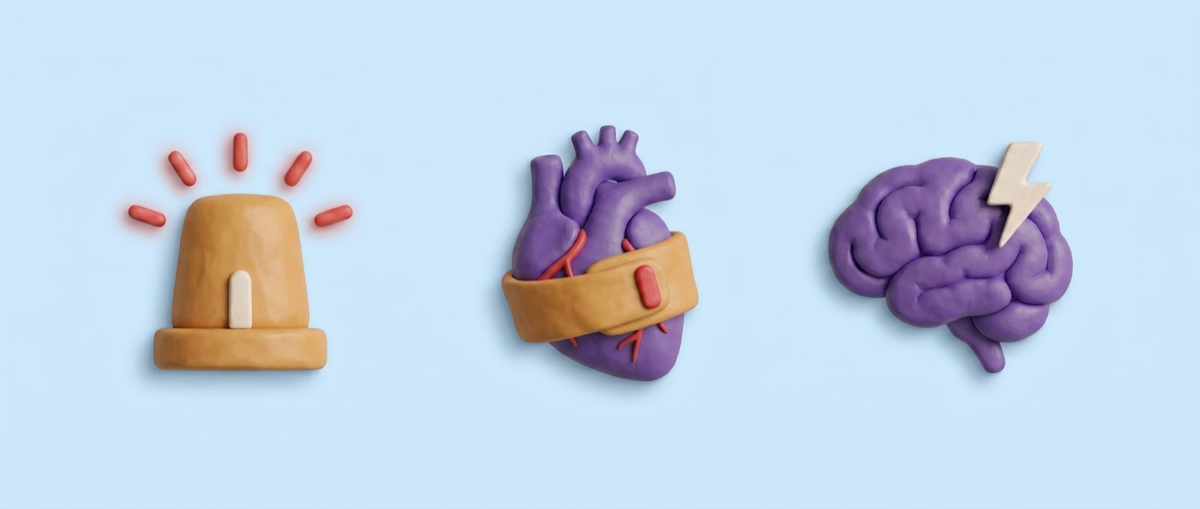
A stroke happens when blood is cut off from part of the brain — by a blocked artery or a bleed. Modern treatment can dissolve or retrieve the clot, but its success depends on arriving within the first hours of symptom onset.
In short — what to do
- Face: ask them to smile — does one side droop?
- Arm: ask them to raise both arms — does one drift down?
- Speech: ask them to repeat a simple sentence — is it slurred or strange?
- Time: any single sign = call 998 immediately.
Videos for this topic
Stroke: the face–arm–speech test
42 secondsA three-step test that reveals a stroke in seconds — one sign is enough: call an ambulance immediately and note when symptoms began.
A stroke usually doesn’t hurt — that’s why people wait
46 secondsThe stroke warning signs that must not be ignored — and why every minute of delay costs brain cells.
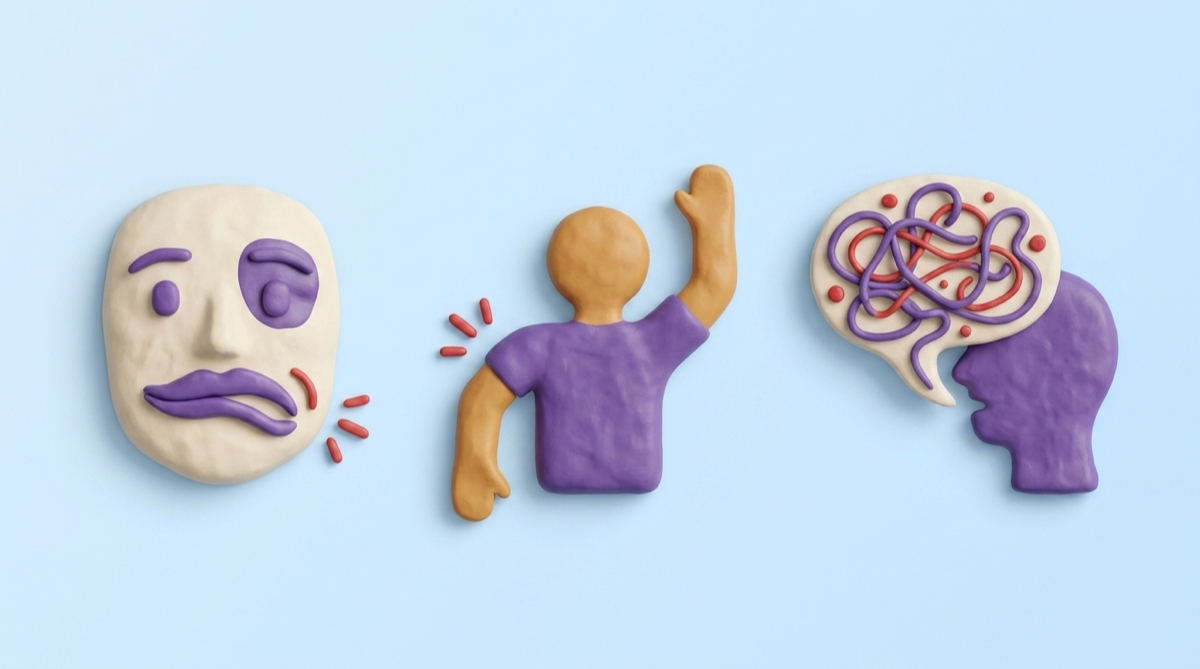
The quick test (F.A.S.T)
- Face: ask them to smile — does one side droop?
- Arm: ask them to raise both arms — does one drift down?
- Speech: ask them to repeat a simple sentence — is it slurred or strange?
- Time: any single sign = call 998 immediately.
The detail that saves: onset time
Note or remember the last time the person was normal — it's the most important question the emergency team will ask, because it determines which treatments are possible. If they woke up with symptoms, the "last normal" time is when they went to sleep.
Other important signs
- Sudden numbness or weakness on one side of the body.
- Sudden vision disturbance in one or both eyes.
- Sudden severe dizziness with loss of balance.
- A sudden "worst-of-my-life" headache.
 Do NOT
- Don't wait for symptoms to "pass" — even if they resolve in minutes, it may be a transient attack warning of a major stroke, and it needs urgent assessment.
- Don't give food, drink, or medicines.
- Don't let them "sleep it off" and check later.
Why the ambulance, not your car?
The 998 team alerts the hospital in advance so the stroke team is ready before you arrive — minutes saved equal millions of cells.
This content is for general health education only and is not medical advice. Always seek guidance from a qualified healthcare professional. In an emergency, call 998.