
The idea is that your car beats the ambulance. But the question is not "who reaches the hospital door first?" — it is "when does treatment start?" And that answer flips the equation.
In short — what to do
- Treatment starts at your door: oxygen, cardiac monitoring, IV access and drugs — before the vehicle moves.
- The crew pre-alerts the hospital, so the stroke or trauma team is ready before you arrive — minutes that equal heart muscle or brain cells.
- They go straight through the ambulance entrance — no queue, no parking, no reception.
- If the patient deteriorates on the way, you are behind the wheel and can do nothing — the crew can.
- The dispatcher guides you by phone from the moment you call until they arrive.
This topic’s video is coming soon on our channels — follow us
@lahzaem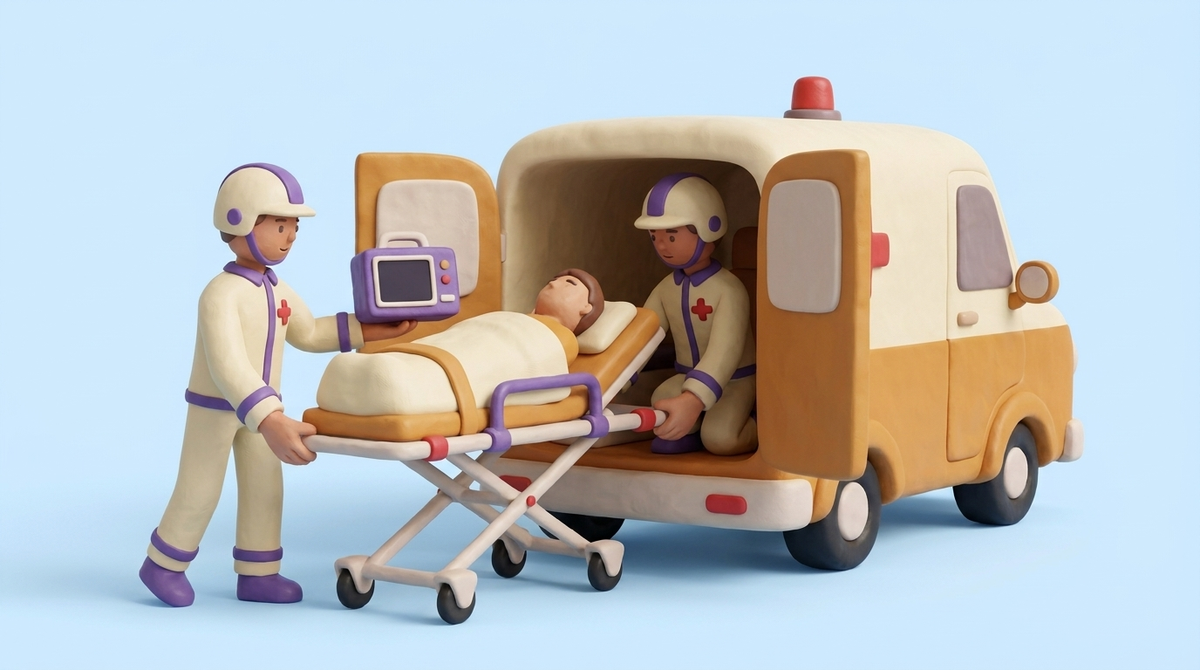
Why the ambulance wins even when it looks slower
- Treatment starts at your door: oxygen, cardiac monitoring, IV access and drugs — before the vehicle moves.
- The crew pre-alerts the hospital, so the stroke or trauma team is ready before you arrive — minutes that equal heart muscle or brain cells.
- They go straight through the ambulance entrance — no queue, no parking, no reception.
- If the patient deteriorates on the way, you are behind the wheel and can do nothing — the crew can.
- The dispatcher guides you by phone from the moment you call until they arrive.
 Never transport these by private car
- Suspected chest pain — collapsing at the wheel kills two people instead of one.
- Signs of stroke — time is the treatment, and the hospital must be ready.
- Severe breathing difficulty, or blue discolouration.
- Loss of consciousness, or an ongoing seizure.
- Bleeding that will not stop with pressure, or a neck or spine injury.
And when is the car reasonable?
Clearly minor complaints: a small cut, a twisted ankle, fever in an active child. The practical rule: if the question "should I call an ambulance?" is in your head — call. The question itself is the answer.
And don’t forget what actually saves minutes: someone at the gate to meet the crew, a clear corridor, and a bag with the patient’s medicines and reports.
This content is for general health education only and is not medical advice. Always seek guidance from a qualified healthcare professional. In an emergency, call 998.