
In an asthma attack the airways tighten and inflame, narrowing the air's path. The reliever inhaler (usually blue) opens them within minutes — but a severe attack may need more than the inhaler, and delay in calling for help is its most dangerous part.
In short — what to do
- Sit upright — don't lie down — and try to stay calm; panic tightens breathing further.
- Take a puff of the reliever (one puff every 30–60 seconds, up to 10 puffs) — ideally through a spacer if available.
- No better after 10 puffs, or symptoms return quickly: call 998.
- Repeat the dose after 10 minutes if the ambulance is delayed — reliever inhalers are safe in repeated doses during an attack.
- Stay seated until help arrives, and loosen tight clothing.
The video for this topic
Asthma attack: your inhaler first — then your decision
39 secondsSit upright, one reliever puff every 30–60 seconds up to 10 — not improving? Call an ambulance. And the “silent chest” that looks like relief but is a warning.
Watch it on Instagram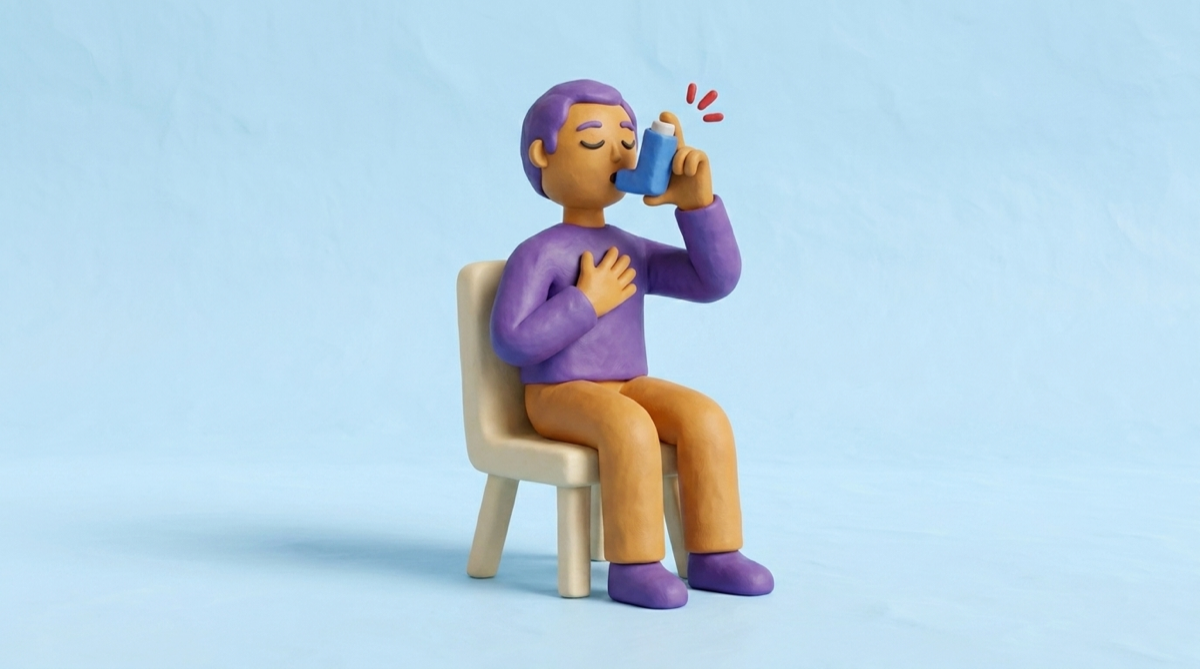
During the attack
- Sit upright — don't lie down — and try to stay calm; panic tightens breathing further.
- Take a puff of the reliever (one puff every 30–60 seconds, up to 10 puffs) — ideally through a spacer if available.
- No better after 10 puffs, or symptoms return quickly: call 998.
- Repeat the dose after 10 minutes if the ambulance is delayed — reliever inhalers are safe in repeated doses during an attack.
- Stay seated until help arrives, and loosen tight clothing.
Before the attack: the asthma plan
Every asthmatic needs an "action plan" from their doctor: the daily preventer, the reliever for crises, and when to step up. Frequent attacks are not "just how asthma is" — they're a signal the plan needs review.
 Call 998 immediately if
- The inhaler isn't helping, or the improvement doesn't last.
- Broken speech — cannot finish a sentence in one breath.
- Blue lips, pallor and sweating, or unusual drowsiness.
- The silent chest: wheeze disappearing while distress remains — a danger sign, not an improvement.
One moment
The most dangerous sentence in asthma: "wait a bit, it'll pass." An attack that doesn't answer your inhaler is not an ordinary attack — call for help early, and never apologise for it.
This content is for general health education only and is not medical advice. Always seek guidance from a qualified healthcare professional. In an emergency, call 998.