
When someone close hints they are "tired of life" or wish they wouldn't wake up, most people freeze: do I ask? Do I ignore it? The evidence is clear: asking directly and calmly about thoughts of self-harm does not increase the risk — it lowers it, because it breaks the isolation.
In short — what to do
- Ask clearly and calmly: "Are you thinking of hurting yourself?" — direct, without blame or panic.
- Listen without judgement: don't interrupt, don't lecture, don't say "others have it worse." Say: "I'm with you, and we'll get help together."
- Don't leave them alone if the risk seems near — stay, or arrange someone who will.
- Quietly remove means of harm from reach: stored medicines, sharp objects, anything they mentioned.
- Help them reach professional care: a psychiatrist or the hospital ER — and go with them if you can; in immediate danger call the ambulance right away.
This topic’s video is coming soon on our channels — follow us
@lahzaem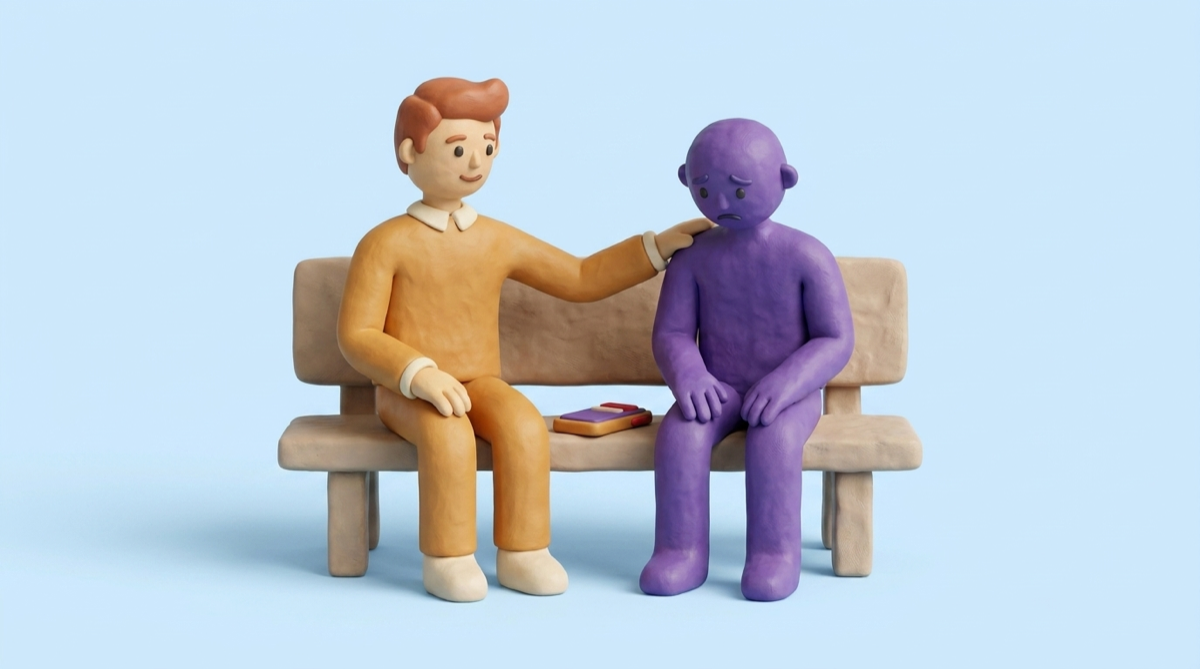
The full details
What to do
- Ask clearly and calmly: "Are you thinking of hurting yourself?" — direct, without blame or panic.
- Listen without judgement: don't interrupt, don't lecture, don't say "others have it worse." Say: "I'm with you, and we'll get help together."
- Don't leave them alone if the risk seems near — stay, or arrange someone who will.
- Quietly remove means of harm from reach: stored medicines, sharp objects, anything they mentioned.
- Help them reach professional care: a psychiatrist or the hospital ER — and go with them if you can; in immediate danger call the ambulance right away.
Signs that demand action now
- Talk of a specific plan, goodbyes, or giving away belongings.
- A strange sudden calm after a period of deep despair.
- Escalating alcohol or sedative use with withdrawal from people.
 Immediate danger = ER immediately
- If harm is imminent or has already started: call 998 or go to the ER now — do not wait for an appointment.
- Never promise absolute secrecy — survival outranks the secret.
If this is you
Dark thoughts are a symptom of treatable pain — they are not who you are and not your ending. Asking for help is courage, and recovery is real: there are far more recovery stories than you hear.
This content is for general health education only and is not medical advice. Always seek guidance from a qualified healthcare professional. In an emergency, call 998.