Jellyfish tentacles leave microscopic stinging capsules on the skin that can keep firing after you leave the water — so first aid's first goal: remove and deactivate them without "detonating" more. The surprise for many: fresh water detonates them.
In short — what to do
- Leave the water calmly and move away from the jellyfish area.
- Rinse generously with SEAWATER — not fresh water, and no towel rubbing.
- Remove stuck tentacles with a plastic card edge or tweezers — not bare fingers.
- Vinegar (if available) helps with many regional jellyfish: pour over the area for 30 seconds before removing tentacles.
- After tentacle removal: tolerably hot water (about 42–45°) for 20–40 minutes relieves pain effectively — or a cold pack if unavailable.
- Simple pain relief and a soothing cream later; watch for allergy signs.
This topic’s video is coming soon on our channels — follow us
@lahzaem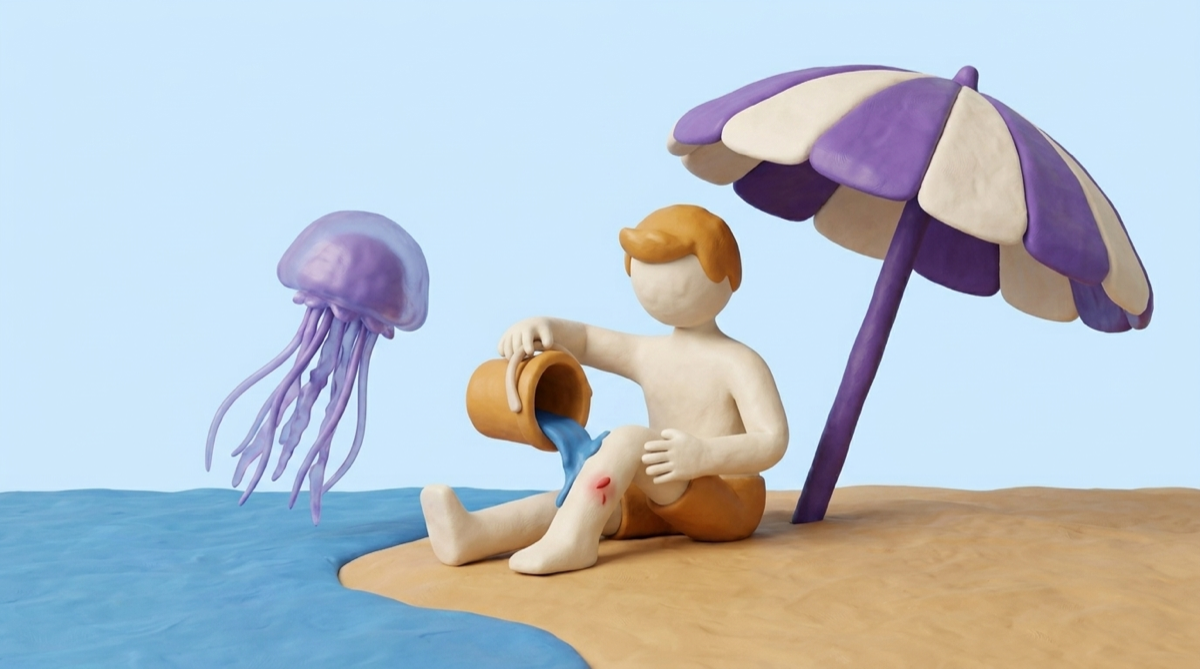
The full details
The steps
- Leave the water calmly and move away from the jellyfish area.
- Rinse generously with SEAWATER — not fresh water, and no towel rubbing.
- Remove stuck tentacles with a plastic card edge or tweezers — not bare fingers.
- Vinegar (if available) helps with many regional jellyfish: pour over the area for 30 seconds before removing tentacles.
- After tentacle removal: tolerably hot water (about 42–45°) for 20–40 minutes relieves pain effectively — or a cold pack if unavailable.
- Simple pain relief and a soothing cream later; watch for allergy signs.
 ER immediately if
- Breathlessness, face/lip swelling, dizziness or fainting — severe allergy or potent venom.
- Extensive stings over a large area, or on the face and eyes.
- Severe unresponsive pain, muscle spasms, or nausea and vomiting.
- A small child or elderly person with a wide sting.
A famous myth
No — urine does not treat jellyfish stings. A TV myth that may trigger more venom release. Seawater, vinegar, tweezers: that trio is the whole correct answer.
This content is for general health education only and is not medical advice. Always seek guidance from a qualified healthcare professional. In an emergency, call 998.