In our region most scorpion stings are locally painful and pass safely in adults — but some species (especially the slender yellow ones) can deliver systemic venom, and small children are the most at risk.
In short — what to do
- Move away from the scorpion, never try to catch it — a distant photo is enough for the doctor if safely possible.
- Wash the sting site with soap and water.
- A cold pack 10–15 minutes (cloth-wrapped, no direct ice) for pain.
- Remove rings and accessories from the limb before swelling.
- Simple pain relief (paracetamol), and rest the limb.
- Observe at least two hours — danger signs below; stricter thresholds for children.
This topic’s video is coming soon on our channels — follow us
@lahzaem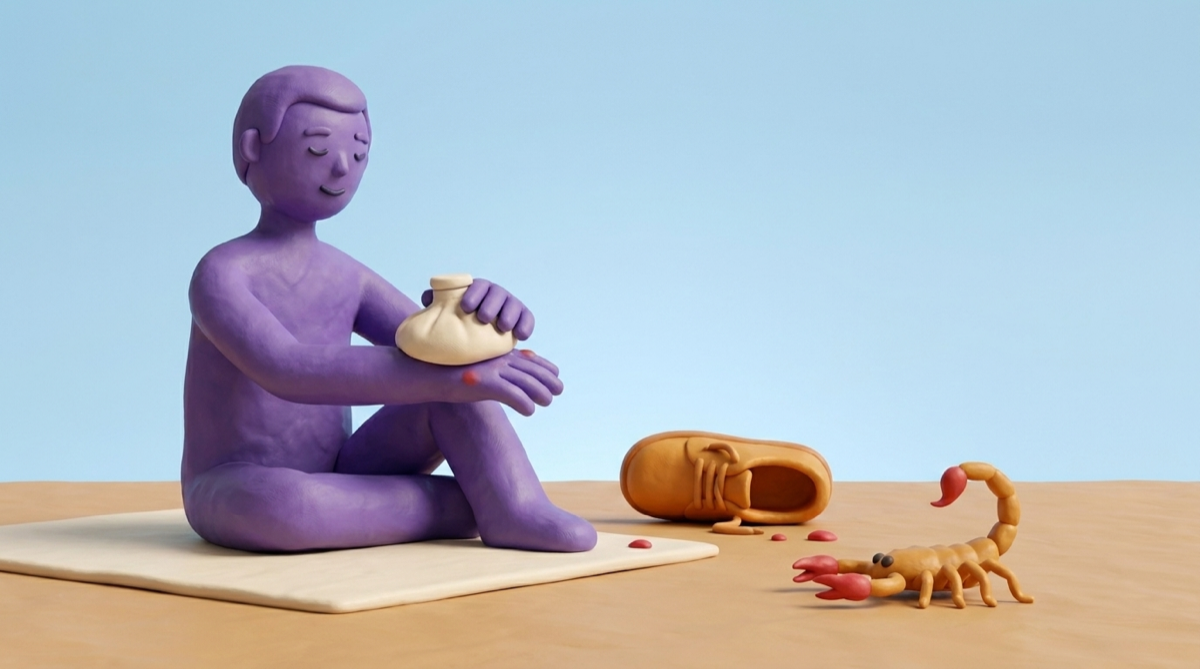
The full details
Immediate first aid
- Move away from the scorpion, never try to catch it — a distant photo is enough for the doctor if safely possible.
- Wash the sting site with soap and water.
- A cold pack 10–15 minutes (cloth-wrapped, no direct ice) for pain.
- Remove rings and accessories from the limb before swelling.
- Simple pain relief (paracetamol), and rest the limb.
- Observe at least two hours — danger signs below; stricter thresholds for children.
 ER immediately (998) if
- A young child is stung — always assessed however well they look.
- Symptoms far from the sting: drooling, heavy sweating, strange eye movements, tremor, seizures, palpitations, breathing difficulty, or agitation.
- A sting on the face or neck, or rapidly spreading swelling.
- Severe allergy signs: lip swelling, spreading rash, breathlessness (see the allergy guide).
Home prevention
Shake shoes before wearing, don't walk barefoot at night in the garden, seal door gaps — the scorpion doesn't attack; it only defends the hiding place you put your hand into.
This content is for general health education only and is not medical advice. Always seek guidance from a qualified healthcare professional. In an emergency, call 998.