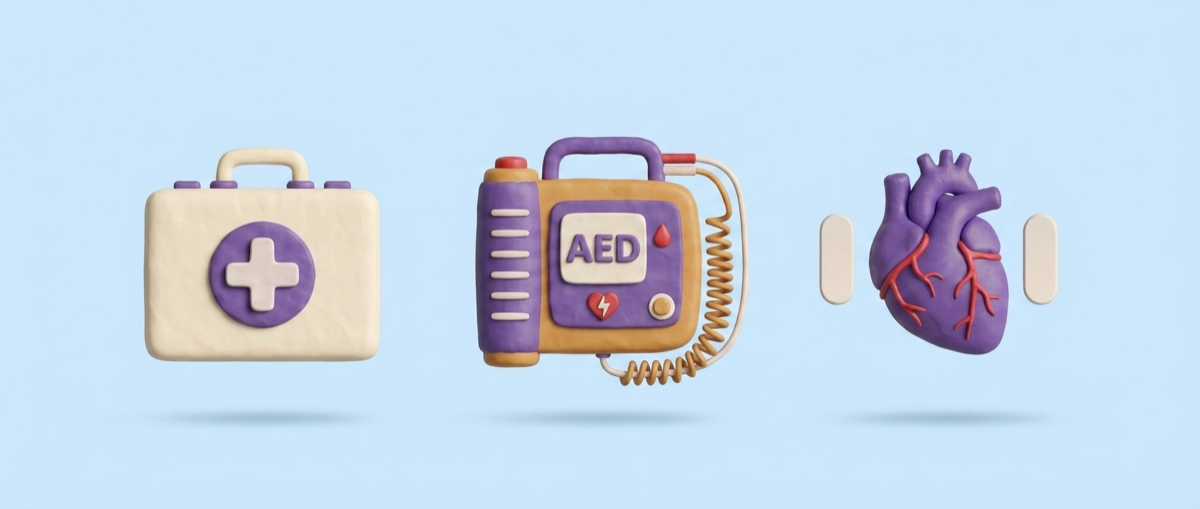
In cardiac arrest, an early shock plus CPR is the strongest chance of survival. The AED reads the heart rhythm itself and decides alone whether a shock is needed — you cannot hurt anyone with it.
In short — what to do
- Fetch the device and open it — it starts guiding you by voice immediately; do what it says.
- Expose the chest and dry it if wet.
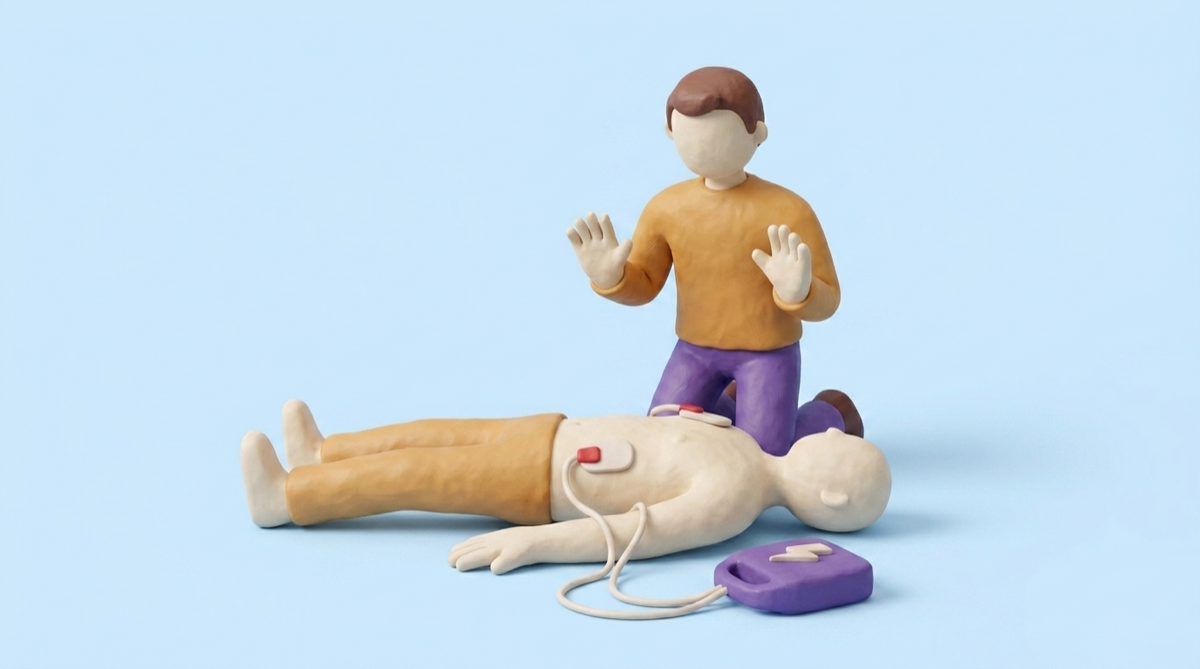
- Stick the two pads exactly as drawn on them: one below the right collarbone, the other below the left armpit.
- When it says "analysing": nobody touches the patient.
- If it advises a shock: make sure everyone is clear, then press the button. If not: resume chest compressions immediately.
- Keep following its instructions until the ambulance arrives — CPR between shocks is half the rescue.
The video for this topic
The AED: don’t fear it
50 secondsIt talks you through every step and won’t shock unless a shock is needed — why you shouldn’t fear using it.
The full details
The steps
- Fetch the device and open it — it starts guiding you by voice immediately; do what it says.
- Expose the chest and dry it if wet.
- Stick the two pads exactly as drawn on them: one below the right collarbone, the other below the left armpit.
- When it says "analysing": nobody touches the patient.
- If it advises a shock: make sure everyone is clear, then press the button. If not: resume chest compressions immediately.
- Keep following its instructions until the ambulance arrives — CPR between shocks is half the rescue.
Special situations
- Children: use pediatric pads if available; otherwise adult pads — one center chest, one center back.
- Wet chest: dry it quickly before sticking pads.
- Medication patch or visible implanted device: place the pad slightly away from it.
Where to find one
Look for the heart-with-lightning ✚ sign in malls, airports, gyms and large mosques. Notice its location in places you visit often — remembering where it is can be the difference.
This content is for general health education only and is not medical advice. Always seek guidance from a qualified healthcare professional. In an emergency, call 998.