A cannula is a thin flexible plastic tube placed in a vein of the hand or forearm. The metal needle is withdrawn the moment it enters — what stays in your hand is soft plastic only, which is why you can move your hand safely.
In short — what to do
- A fast route for medicines that work in minutes instead of hours.
- Fluid replacement in dehydration and bleeding.
- Sometimes blood samples from the same site — no extra needle pricks.
- A ready safety gateway if the condition suddenly worsens.
This topic’s video is coming soon on our channels — follow us
@lahzaem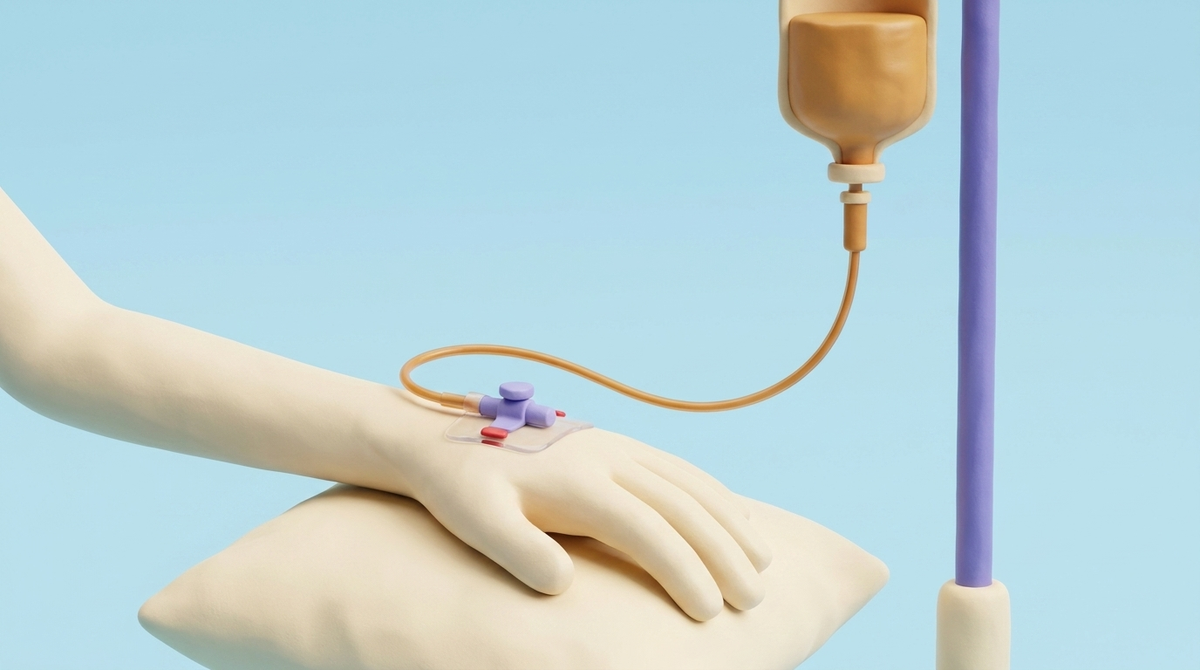
The full details
Why do we place it?
- A fast route for medicines that work in minutes instead of hours.
- Fluid replacement in dehydration and bleeding.
- Sometimes blood samples from the same site — no extra needle pricks.
- A ready safety gateway if the condition suddenly worsens.
The "drip" myth
- The fluid bag is mostly water and salts — not vitamins, not a "boost".
- If you can drink safely, drinking is better than IV fluid in most cases.
- Leaving the ER without a drip doesn't mean incomplete treatment — it means your condition didn't need one.
Care for it, and tell us
- Tell the nurse immediately if the site becomes red, swollen, or painful when medicine is given.
- Keep the site dry and leave the dressing alone.
- The insertion sting lasts seconds only — and numbing cream for children is a real option in many departments.
Worth knowing
Choosing a good vein is a real skill — and if the first attempt fails, that is the nature of veins, not nurse negligence. Drinking well before you come (unless you were told to fast for a procedure) makes your veins easier to find.
This content is for general health education only and is not medical advice. Always seek guidance from a qualified healthcare professional. In an emergency, call 998.