Hypoglycaemia (usually below 70 mg/dL) happens in diabetics on insulin or certain tablets — from a delayed meal, extra exertion, or too large a dose. The brain runs on sugar, so consciousness deteriorates fast if you don't act.
In short — what to do
- Give 15 grams of fast sugar: half a cup of juice, 3 dates, 3 teaspoons of sugar in water, or glucose tablets.
- Wait 15 minutes and re-check the sugar if a meter is available.
- Still low or still symptomatic? Repeat another 15 grams.
- After improvement: a real snack (bread, dates with milk) to hold the sugar up.
This topic’s video is coming soon on our channels — follow us
@lahzaem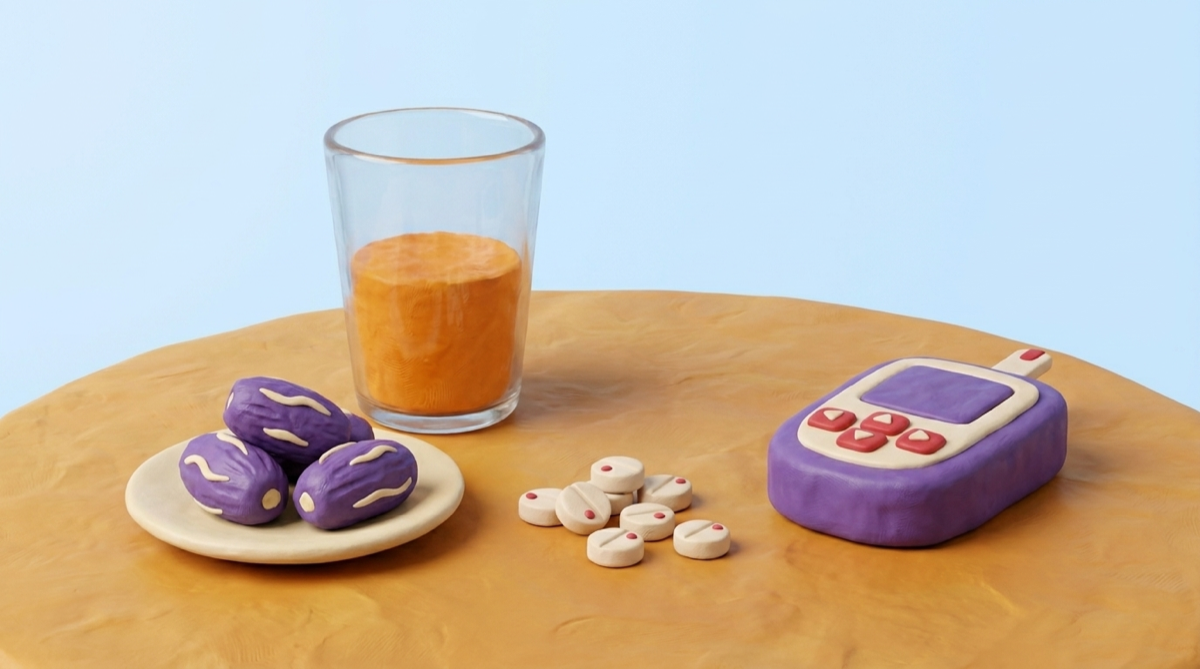
The full details
The signs
- Cold sweat, tremor, palpitations, intense hunger.
- Confusion, sudden irritability, strange speech — they may seem "drunk".
- And in severe cases: drowsiness, seizure, unconsciousness.
Awake and able to swallow? The 15/15 rule
- Give 15 grams of fast sugar: half a cup of juice, 3 dates, 3 teaspoons of sugar in water, or glucose tablets.
- Wait 15 minutes and re-check the sugar if a meter is available.
- Still low or still symptomatic? Repeat another 15 grams.
- After improvement: a real snack (bread, dates with milk) to hold the sugar up.
Unconscious or can't swallow?
- Put nothing in their mouth — no juice, no honey; they will choke.
- Place them in the recovery position and call 998 immediately.
- If a glucagon kit is available and someone knows how: give it now.
 Common mistakes
- Giving chocolate or biscuits — the fat slows sugar absorption.
- Injecting insulin "to fix the situation" — the low gets lower.
- Letting them drive or sleep before confirming the sugar has risen.
For diabetics and their families
Keep dates or glucose tablets in the car, the office and your pocket. Teach the household the 15/15 rule — a low comes suddenly and doesn't ask permission.
This content is for general health education only and is not medical advice. Always seek guidance from a qualified healthcare professional. In an emergency, call 998.