
Low back pain is one of the commonest reasons to see a doctor, and most of it comes from muscles and ligaments. The surprise is that complete bed rest slows recovery: gentle movement is the best treatment.
In short — what to do
- Keep moving as much as you can, and take short walks several times a day.
- A simple painkiller as the leaflet directs.
- Warm compresses.
- Return to work and activity gradually.
- See a doctor if it has not improved in four to six weeks, or if it is getting worse.
Watch Lahza’s short videos on our channels
@lahzaem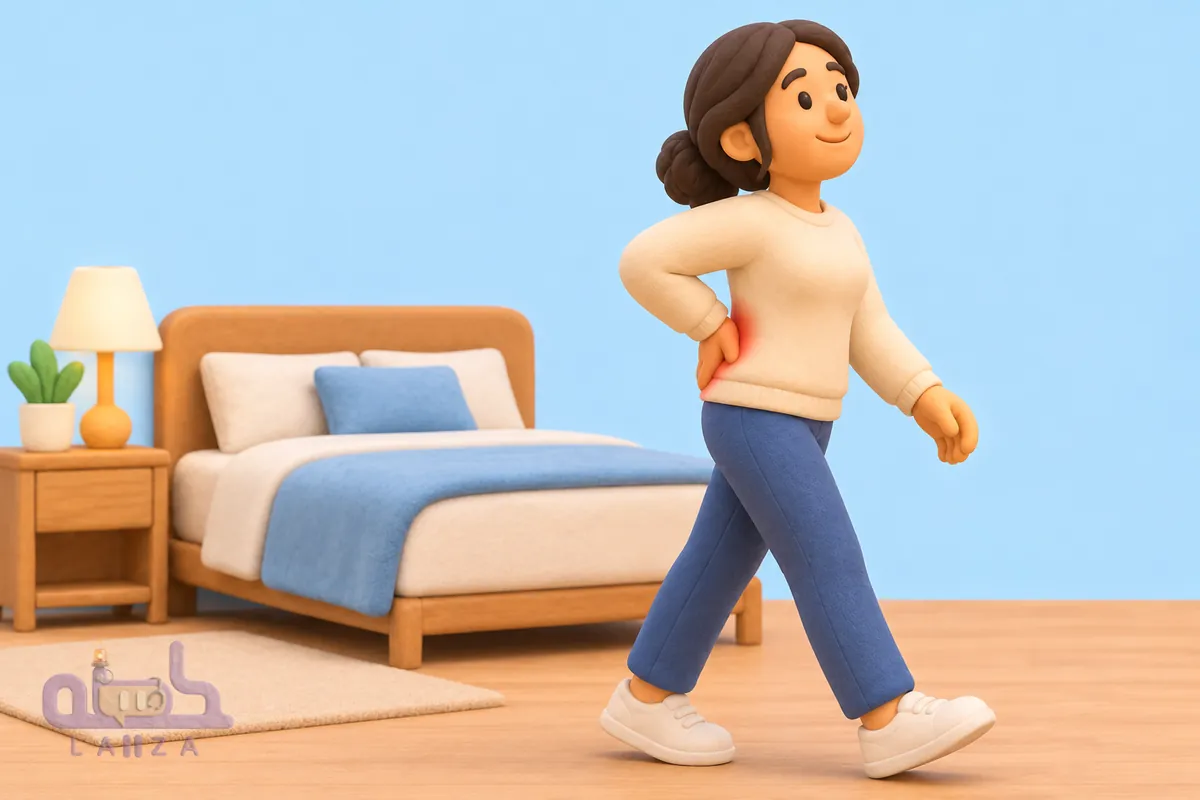
The full details
Ordinary pain: what to do
- Keep moving as much as you can, and take short walks several times a day.
- A simple painkiller as the leaflet directs.
- Warm compresses.
- Return to work and activity gradually.
- See a doctor if it has not improved in four to six weeks, or if it is getting worse.
 Go to the ER now: signs of pressure on the pelvic nerves
- Numbness or tingling around the back passage or genitals, or the inner upper thighs, the area you sit on.
- New difficulty passing urine or being unable to pass it, or losing control of urine or stool.
- Weakness getting worse in the legs or feet, or pain and numbness in both legs.
- Sudden loss of sexual function with the back pain.
Also go to the ER if
- Back pain with fever, especially with diabetes or after surgery or injections in the back.
- After a fall or accident, or in an older person after a minor injury.
- Sudden, severe, tearing pain spreading to the belly in someone over 50, or with dizziness.
- A history of cancer, or weight loss with no reason.
- Constant night pain that rest does not ease.
Do not be embarrassed by the doctor’s questions about urine, stool and feeling around the pelvis: they are the most important questions in checking back pain.
Say it in your first sentence
If you go to the ER with these signs, lead with them clearly: "I have numbness around my back passage" or "I can’t pass urine". That sentence saves hours.
This content is for general health education only and is not medical advice. Always seek guidance from a qualified healthcare professional. In an emergency, call 998.