
A honeybee leaves its stinger in the skin with a venom sac that keeps pumping; a wasp leaves no stinger and can sting more than once. Either way, the real danger is usually not the venom itself but the body’s allergic reaction in some people.
In short — what to do
- Move away calmly — a sting attracts the rest of the swarm.
- Get the stinger out as fast as you can: scrape it off with a fingernail or the edge of a card. Speed matters more than method — but do not squeeze the venom sac between two fingers or with tweezers.
- Wash the area with soap and water.
- A cold compress for 10–15 minutes (wrapped in cloth, never ice on bare skin) and raise the limb.
- Take off rings and bracelets before the limb swells.
- A simple painkiller (paracetamol) for pain and an oral antihistamine for itching — as the leaflet directs.
- Watch the person for at least an hour — the most dangerous reactions appear in the first minutes to the first hour.
Watch Lahza’s short videos on our channels
@lahzaem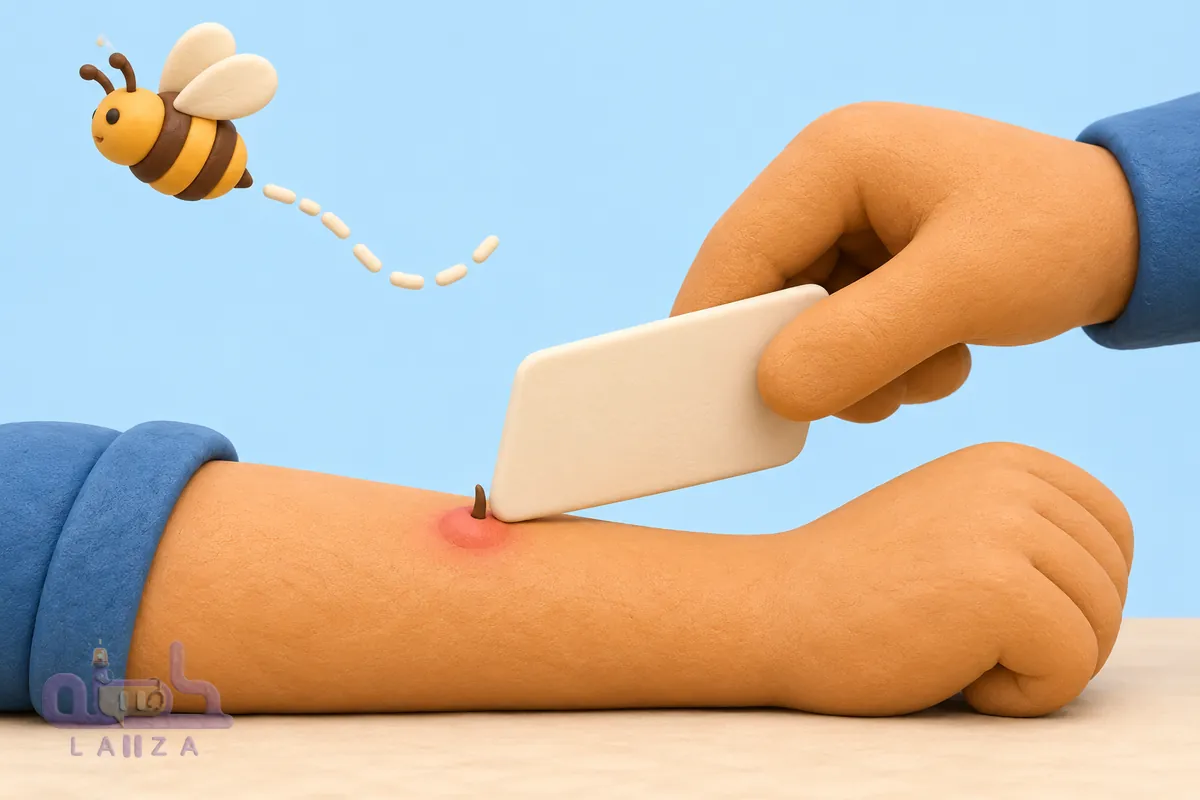
The full details
Immediate first aid
- Move away calmly — a sting attracts the rest of the swarm.
- Get the stinger out as fast as you can: scrape it off with a fingernail or the edge of a card. Speed matters more than method — but do not squeeze the venom sac between two fingers or with tweezers.
- Wash the area with soap and water.
- A cold compress for 10–15 minutes (wrapped in cloth, never ice on bare skin) and raise the limb.
- Take off rings and bracelets before the limb swells.
- A simple painkiller (paracetamol) for pain and an oral antihistamine for itching — as the leaflet directs.
- Watch the person for at least an hour — the most dangerous reactions appear in the first minutes to the first hour.
 Call 998 now if any of these appear
- Difficulty breathing, wheezing, or a suddenly hoarse voice.
- Swelling of the lips, tongue, face or throat.
- A rash or itching spreading over the body, away from the sting.
- Dizziness, pallor, fainting or a racing heart.
- Vomiting or severe cramps after the sting.
- If they carry an adrenaline (epinephrine) pen: inject it into the thigh at once, do not wait — then lay them down and raise the legs (see the severe allergy guide).
Emergencies even without allergy
- A sting inside the mouth or throat (a bee in a glass of juice): swelling can block the airway — suck an ice cube or sip cold water on the way to the ER.
- Many stings at once — especially in a child or an older adult: the amount of venom itself becomes dangerous.
- A sting to the eye.
- Anyone who has had a severe reaction to a sting before — they are assessed even if they look well.
Do not
- Do not squeeze the sting site or try to “suck out the venom”.
- No toothpaste, garlic or mud — they do not help and can contaminate the skin.
- Do not scratch — it increases swelling and invites infection.
Big swelling the next day?
Redness and swelling that widen around the sting over a day or two are a local reaction: unpleasant, but usually not dangerous — cold compresses and elevation. See a doctor if there is fever, pus or red streaks, or if pain increases after the third day.
This content is for general health education only and is not medical advice. Always seek guidance from a qualified healthcare professional. In an emergency, call 998.