The stone travels down the tube between the kidney and the bladder and partly blocks it. The pain comes in waves in the flank and spreads to the lower belly, groin or genitals, with nausea; the person keeps moving and cannot find a comfortable position. There may be blood in the urine.
In short — what to do
- A painkiller as your doctor prescribed. Anti-inflammatory painkillers (such as diclofenac) suit stones best, unless you have kidney disease, a stomach ulcer or are pregnant.
- Drink a normal amount of water. There is no need to force down extra litres.
- A warm compress on the flank may ease the pain.
- If you can, strain your urine through a cloth to catch the stone and take it to your doctor for analysis.
- See a doctor within days, even if the pain settles.
Watch Lahza’s short videos on our channels
@lahzaem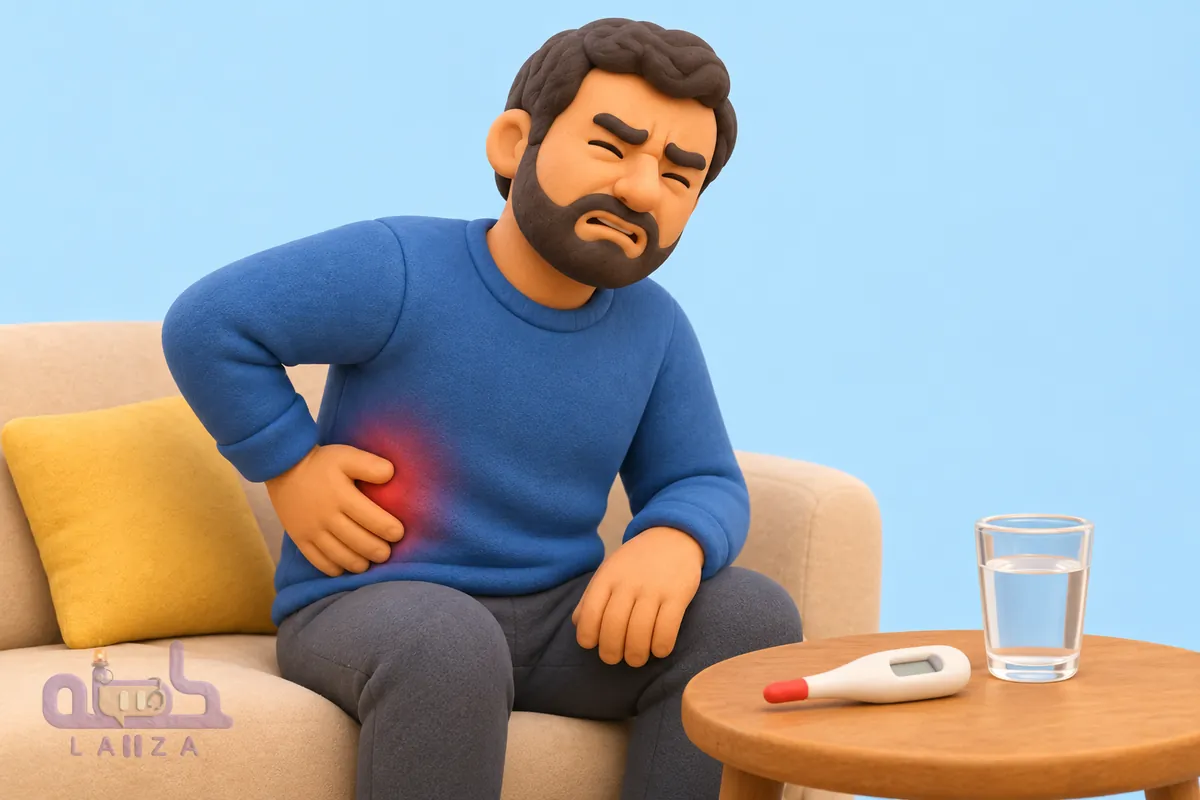
The full details
Before you say "stone": is it really a stone?
- Over 50 and this is the first attack? Flank pain can come from the main artery in the belly (the aorta), a deadly emergency. Go to the ER.
- A woman who could be pregnant? Lower belly and flank pain can be an ectopic pregnancy.
- Pain that starts around the navel and moves to the lower right belly may be appendicitis.
If you know you get stones and the attack is mild
- A painkiller as your doctor prescribed. Anti-inflammatory painkillers (such as diclofenac) suit stones best, unless you have kidney disease, a stomach ulcer or are pregnant.
- Drink a normal amount of water. There is no need to force down extra litres.
- A warm compress on the flank may ease the pain.
- If you can, strain your urine through a cloth to catch the stone and take it to your doctor for analysis.
- See a doctor within days, even if the pain settles.
 Go to the ER now if
- Fever or shivering with kidney pain: a blocked, infected kidney, one of the most dangerous things a stone can do.
- Pain that the painkiller does not relieve.
- Constant vomiting that stops you drinking.
- Very little urine, or none.
- You have only one kidney, or a transplanted kidney.
- You are pregnant.
- A first attack after age 50, or dizziness or fainting with the pain.
Do not
- No "stone dissolvers" or herbs without a doctor.
- Do not drive while doubled up with pain.
- Do not take more painkiller than the allowed dose if it is not enough: that is a reason to go to the ER.
So it does not come back
Drink enough water every day to keep your urine pale, especially in summer and when fasting. Cut down on salt. Do not cut out milk and dairy without a doctor; it does not prevent stones. And ask for the stone to be analysed.
This content is for general health education only and is not medical advice. Always seek guidance from a qualified healthcare professional. In an emergency, call 998.